Textile Decoded
What a Process House Does: Greige to Finished Fabric
The steps that turn raw woven cloth into finished uniform fabric: inspection, singeing, desizing, scouring, bleaching, mercerising, heat-setting, dyeing, finishing, stentering and final checks.
Jump to section
Quick answer
Cloth comes off the loom as greige (also called grey) fabric: undyed, stiff with size, and carrying dust, oil and loose fiber. A process house turns it into finished fabric. It inspects the greige. It burns off surface fiber (singeing), washes out the size, a starch-like coating on the warp yarn (desizing), cleans out natural waxes and dirt (scouring) and whitens the cloth (bleaching). Cotton is treated with caustic soda for luster and better dye pickup (mercerising), and polyester is set with heat so it keeps its size. Then the process house dyes or prints the cloth, applies finishes, pulls it to the right width on a stenter, inspects it again and packs it. Benny Cotts weaves in-house at Village Atoon and sends the greige to partnered Bhilwara process houses for all of these steps.
Why woven cloth is not ready yet
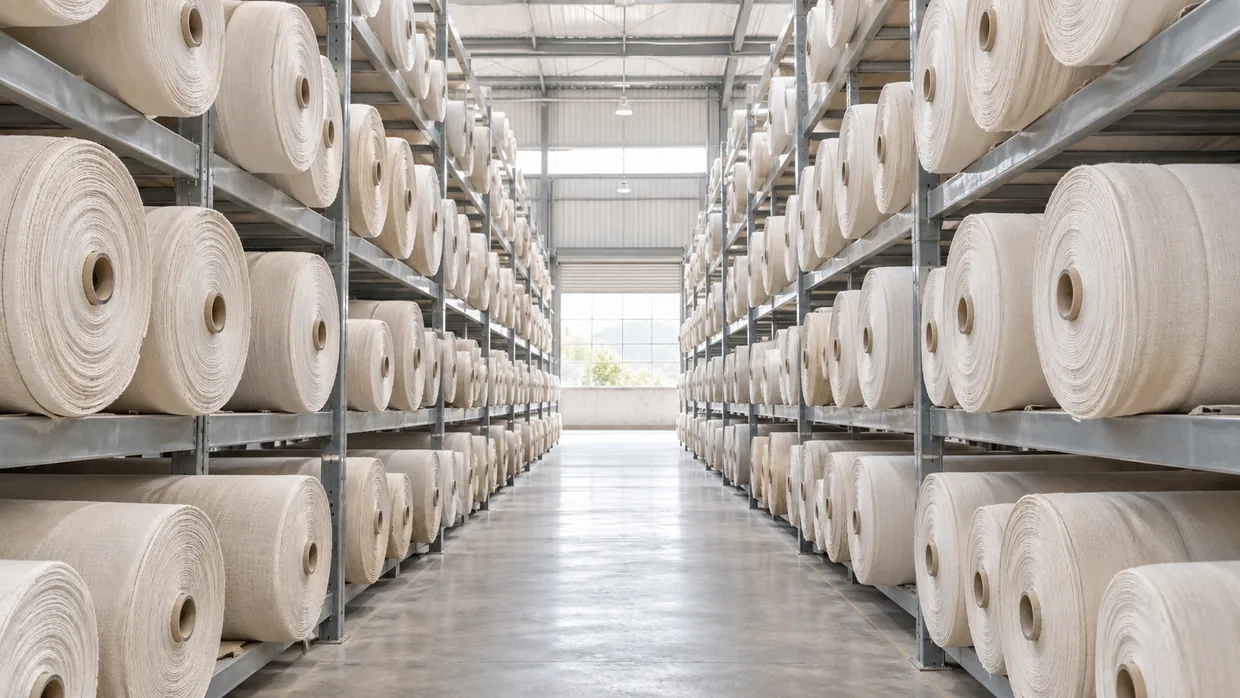
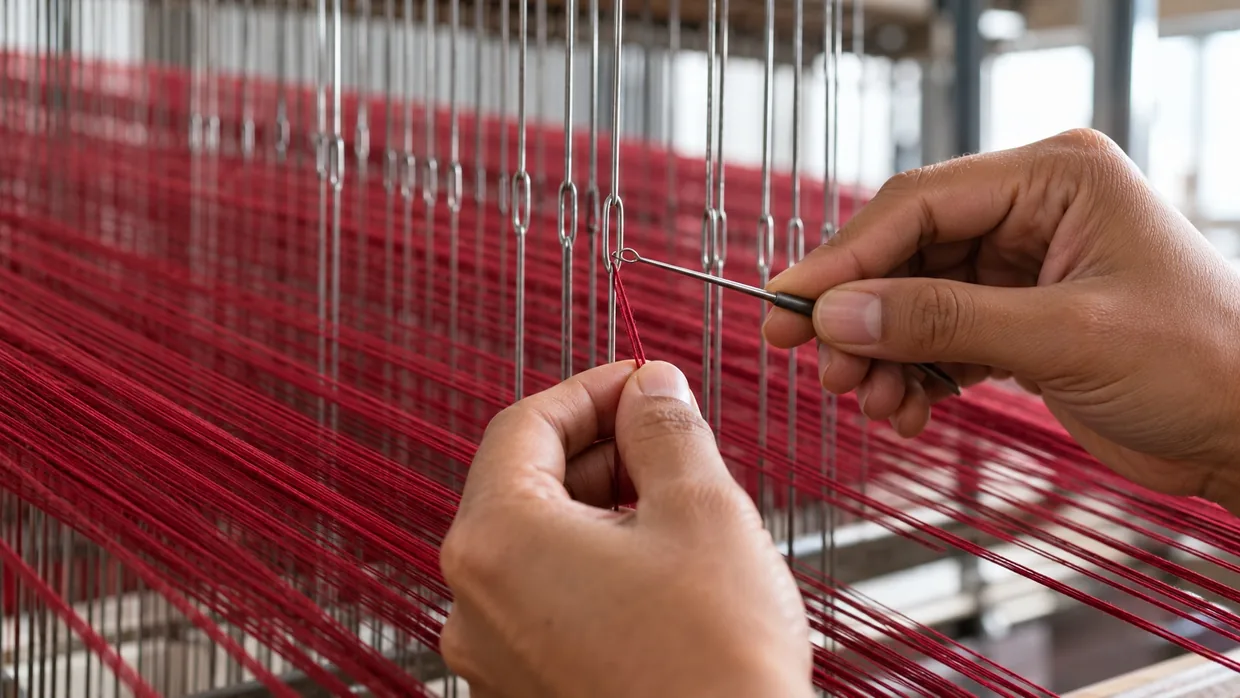
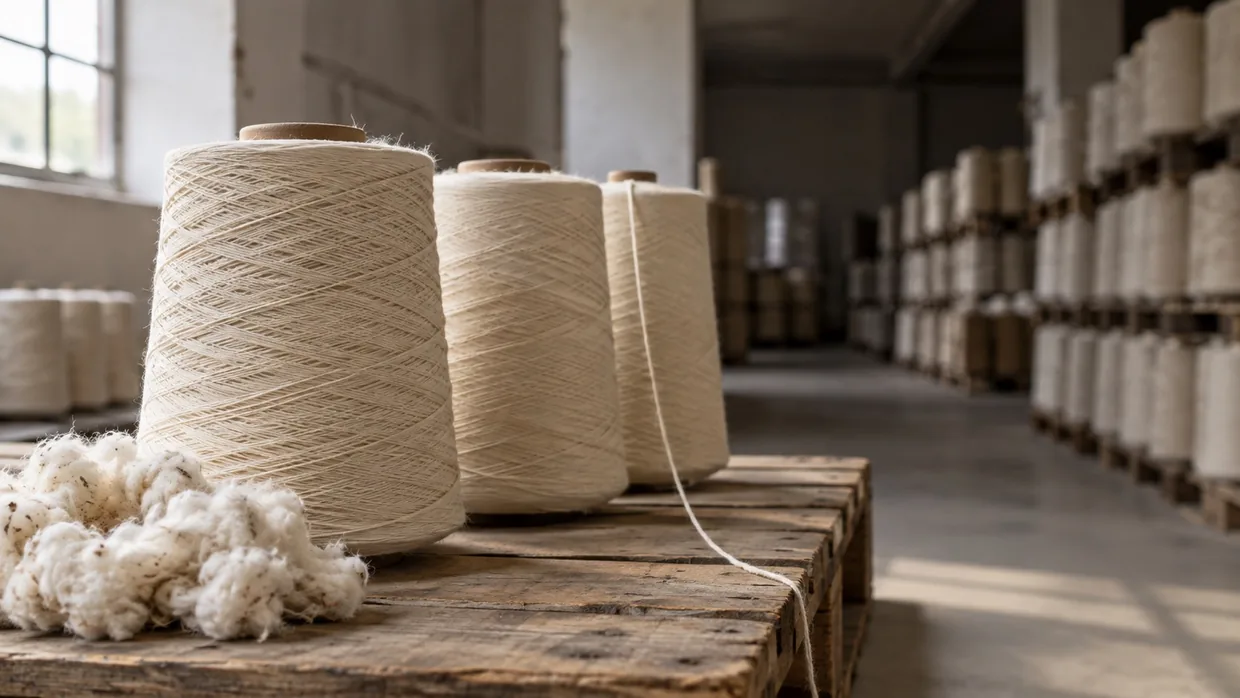
Fabric straight off the loom is called greige or grey fabric. Grey here does not mean the colour: it means unfinished. It is usually off-white, feels stiff and slightly rough, and is not stable in size yet.
That stiffness comes from size, the starch-like coating put on the warp yarn before weaving so it survives the loom. The cloth also carries natural waxes from cotton, spinning oils, dust from the weaving hall and tiny loose fibers on the surface. Such cloth would dye patchily and shrink in the wash. A process house fixes all of that.
Benny Cotts does not run its own process house. We weave at our unit in Village Atoon, Bhilwara, and our partnered Bhilwara process houses do the dyeing, processing, finishing and testing. Bhilwara is one of India's main suiting and uniform fabric centres, so these specialists are close to the looms.
The route at a glance
Every process house has its own machines and order, and not every fabric needs every step. A typical route for a uniform fabric looks like this:
- Grey inspection: check the greige for weaving faults before any money is spent on it.
- Preparation: singeing, desizing, scouring and bleaching, so the cloth is clean and even.
- Fiber-specific treatment: mercerising for cotton, heat-setting for polyester.
- Colour: dyeing for solid shades, printing for patterns.
- Finishing and stentering: chemical finishes, then drying to a fixed width.
- Final inspection and packing: check shade, width and faults, then roll and label.
Grey inspection and preparation
Grey inspection comes first. The greige is run over a lit inspection frame and checked for weaving faults such as broken ends, missing picks and stains. Finding a fault now is cheaper than finding it after dyeing. Our guide to woven fabric defects explains which faults start at the loom and which start in processing.
Then come the preparation steps, often called pretreatment:
- Singeing: the cloth passes quickly over gas flames or hot plates that burn off the tiny fibers sticking out of the surface. The fabric moves too fast to burn. This gives a clean, smooth face and less fuzz later.
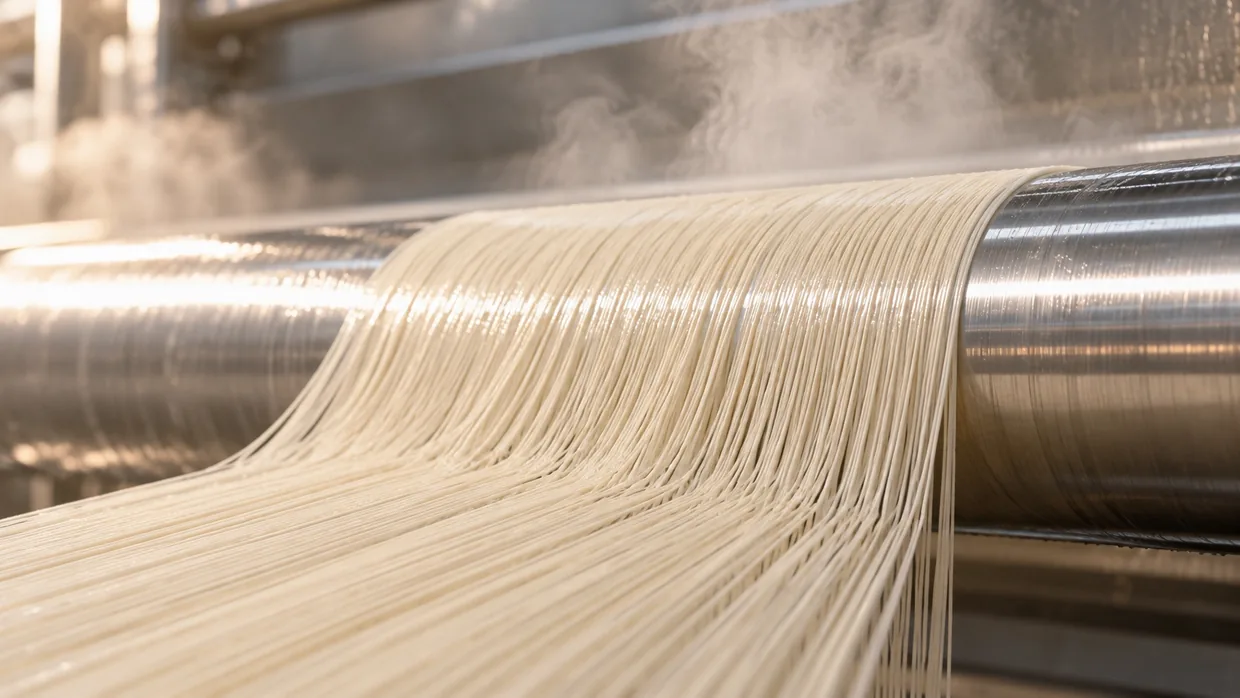
- Desizing: the size put on the warp before weaving is washed out, using enzymes or chemicals depending on the size used. Dye cannot reach yarn that is still coated.
- Scouring: a hot alkaline wash removes natural waxes, oils and dirt, so the cloth soaks up water and dye evenly.
- Bleaching: usually with hydrogen peroxide, this removes the natural yellowish tint so the base is a clean white. It matters most for whites and light shades.
Mercerising cotton, heat-setting polyester
Different fibers need different treatment, which is why blends take careful handling. Our fabric blends guide covers how cotton, polyester and viscose behave.
Mercerising is for cotton. The cloth is treated with a strong caustic soda solution while held under tension, then washed. The cotton fibers swell and become rounder, which gives more luster, better strength and deeper, more even dyeing with less dye.
Heat-setting is for polyester. Polyester is a plastic fiber, and heat locks its shape. The fabric is held at a set width and passed through hot air, so it remembers that size and shape. This keeps polyester and poly-viscose fabric stable in later hot steps and in use, and helps it resist creasing.
Dyeing and printing
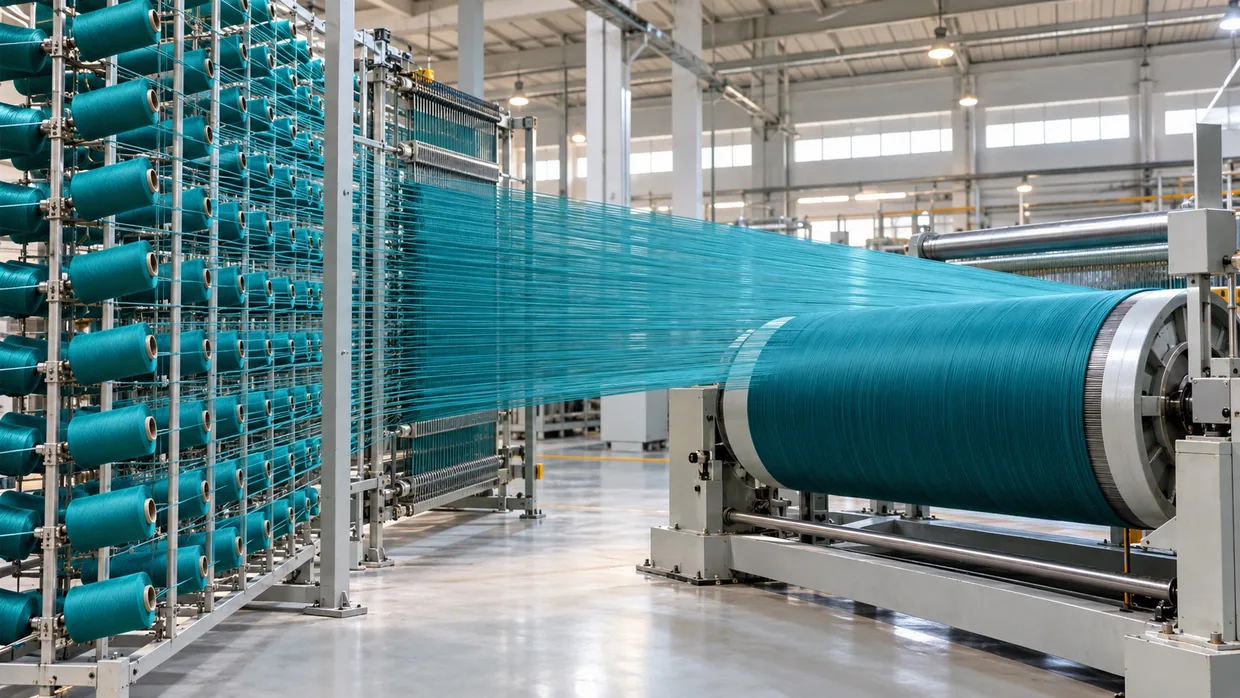
Most uniform fabric is dyed as a whole piece to one solid shade, called piece dyeing. Each fiber needs its own dye family: polyester takes disperse dyes at high temperature, while cotton and viscose usually take reactive dyes. A blend such as poly-viscose is therefore dyed with both dye families so the shade looks even. Some fabrics instead use yarn that is dyed before weaving, which our yarn-dyed vs piece-dyed guide compares.
Dyeing is checked against the approved shade under standard lights, and each batch becomes a dye lot. Matching lot to lot is a big topic of its own, covered in our dye lot consistency guide.
Printing puts colour on the surface in a pattern instead of all over. It is common in fashion fabric and less common in uniforms, which are mostly plain shades, checks or stripes.
Finishing and stentering
Finishing is everything done to change how the fabric feels and performs. Common uniform finishes include softeners for a soft feel, easy-care and wrinkle resistance, and functional finishes such as water repellency or anti-microbial treatment. Our guide to fire retardant, anti-microbial and moisture finishes explains the main ones.
A stenter is a long hot-air dryer with pins or clips on chains that grip both edges of the fabric. It pulls the cloth to an exact width, dries it, and cures any finish applied just before. Stentering is also where the fabric's final width is fixed. Many fabrics then get a shrinkage control step so they hold their size in washing, which our fabric shrinkage guide covers.
Final inspection and packing
Before despatch the finished fabric is inspected again: shade against the standard, width, weight, and any faults along the length, which are marked and counted. Fabric is tested for properties like shrinkage and colour fastness, as our how we test our fabric guide explains.
It is then rolled or folded, wrapped and labelled with its quality, shade, lot and length, ready to go to the buyer.
What this means for a fabric buyer
Almost everything you notice first about a uniform fabric, its colour, feel, sheen, width and how it washes, is decided at the process house, not the loom. The loom decides the construction; the process house decides the finish. Because most dyed fabric passes through process houses, closures hit supply quickly: see what the Pali, Balotra and Jodhpur shutdowns mean for dyed fabric.
That is why a shade, a finish or a width request is a processing question, and why processing adds time to every order. For whites, the bleaching and finishing route matters most, as our white shirting guide shows.
Next lesson: Dyeing: which dye for which fiber, the biggest step inside the process house. Browse the full course on the Textile Decoded hub.
FAQ
Frequently asked questions
- What is a process house in textiles?
- A process house is a unit that turns greige fabric from the loom into finished fabric. It cleans and prepares the cloth, dyes or prints it, applies finishes, sets the width and inspects it before packing.
- What is the difference between greige and finished fabric?
- Greige fabric is cloth straight off the loom: undyed, stiff with size and not stable in size. Finished fabric has been cleaned, coloured, finished and set to width, so it is ready to cut and sew.
- Why is cotton mercerised and polyester heat-set?
- Mercerising treats cotton with caustic soda under tension for more luster, strength and even dyeing. Heat-setting holds polyester at a set width in hot air so it keeps its size and shape. Each suits the nature of its fiber.
- Does Benny Cotts dye and finish its own fabric?
- No. We weave in-house at Village Atoon, Bhilwara, and partnered Bhilwara process houses handle dyeing, processing, finishing and testing. You can Request Catalog at /quote to see the finished fabrics.
Cite this guide
Quoting this page? Paste the line below so the credit links back.
<a href="https://www.bennycotts.com/guides/what-a-process-house-does">What a Process House Does: Greige to Finished Fabric</a>, Benny Cotts, 2026Next in Processing
Dyeing: Which Dye for Which Fiber
More in Processing
- What a Process House Does: Greige to Finished Fabric
- Dyeing: Which Dye for Which Fiber
- Lab Dips and Shade Approval, Explained
- Why Reorders Do Not Match: Dye-Lot Consistency
- Fabric Swatches vs Shade Cards Explained
- Fire-Retardant, Anti-Microbial and Moisture-Control Finishes Explained
- Water-Repellent, Oil-Repellent and Anti-Static Finishes Explained
- Easy-Care and Wrinkle Recovery in Shirting, Explained
- Why Uniforms Shrink, and How to Prevent It
- Does Viscose Pill? Uniform Fabric Pilling and How to Spec It
- Why Uniforms Fade: Colour Fastness and Hot Washing
- Why White Shirts Go Yellow or Grey, and How to Spec Against It
- What Moves Processing Costs: Dyes, Energy, Water, Shade and Lot Size
Updated 18 October 2026 · Benny Cotts, Bhilwara
Fabrics
Fabrics mentioned in this guide
Spec, price and MOQ on every fabric page.

Nano
Poly-Viscose blend · 180-200 GSM
Our entry-level uniform fabric for large-volume programs.

Sonata
Poly-Viscose blend · 190-210 GSM
Cost-efficient uniform fabric without compromising weave quality.

Grado 1st
Poly-Viscose blend · 220-240 GSM
Tailoring-grade fabric built for everyday durability.
Industries this applies to
Uniform programs these fabrics are used for
- Fabric for Business Attire
- Fabric for Corporate Uniforms
- Fabric for Corporate Shirts
- Fabric for Corporate Trousers
- Fabric for Blazers & Waistcoats
- Fabric for School Uniforms
- Fabric for College & University Uniforms
- Fabric for Sports & PT Uniforms
- Fabric for Pre-School & Kindergarten Uniforms
- Fabric for Doctor Coats
- Fabric for Nurse Scrubs
- Fabric for Lab Coats
- Fabric for OT & Surgical Wear
- Fabric for Patient Gowns
- Fabric for Hospital Staff Uniforms
- Fabric for Chef Coats
- Fabric for Salon & Spa Uniforms
- Fabric for Cabin Crew Uniforms
- Fabric for Ground Staff Uniforms
- Fabric for Army Uniforms
- Fabric for Police Uniforms
- Fabric for Security Guard Uniforms
- Fabric for Industrial Uniforms
- Fabric for Construction Workwear
- Fabric for Housekeeping Uniforms
- Fabric for Business Suits
- Fabric for Black-Tie Attire
- Fabric for Formal Event Wear
Fabric types covered here
Keep reading
Related guides
Ready to place an enquiry?