Textile Decoded
Loom Types: Shuttle, Rapier, Air-Jet, Projectile and Water-Jet
How each main loom type carries the weft across the warp, what that means for speed, width and yarn choice, and which looms suit suiting, shirting and uniform cloth.
Jump to section
Quick answer
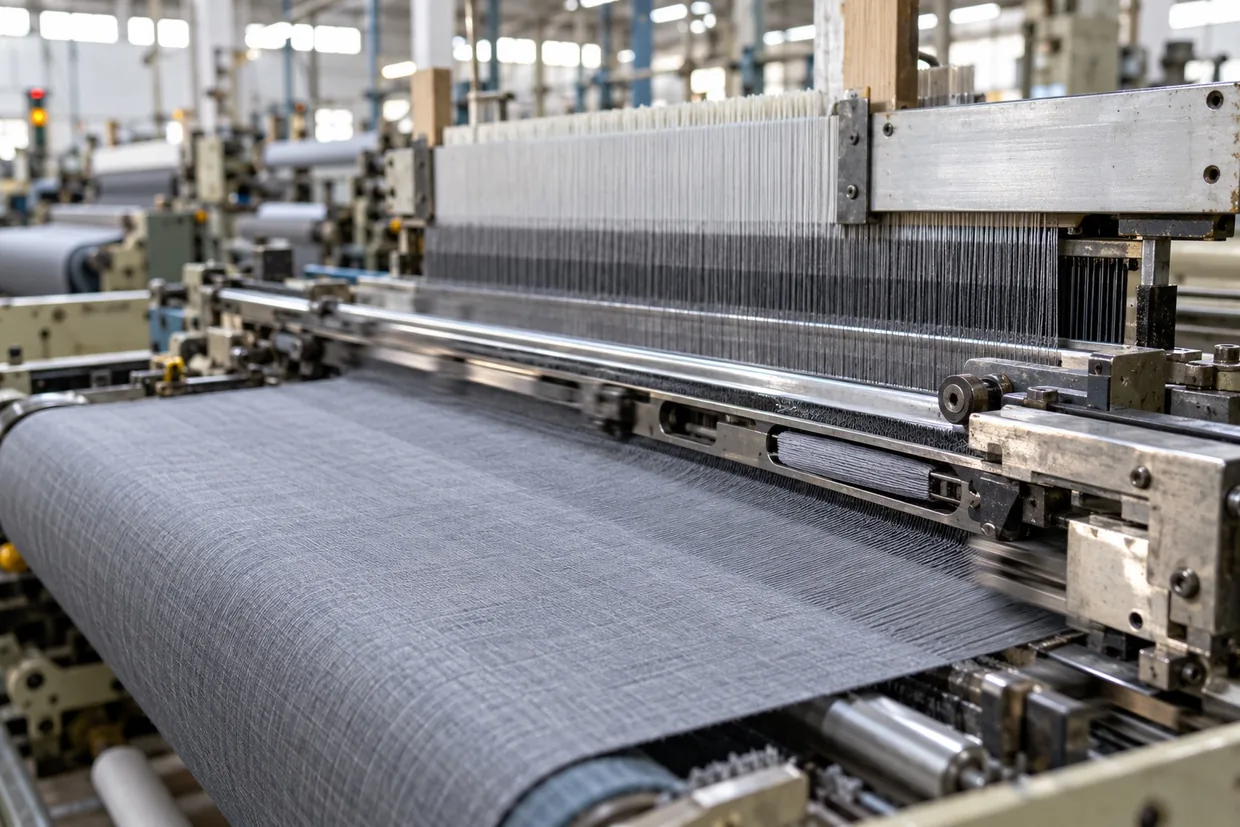
Every loom does the same three things: it opens the warp, sends a weft thread across, and beats it into the cloth. Loom types differ in how the weft gets across. A shuttle loom throws a wooden or plastic carrier holding a bobbin of weft. A rapier loom uses a rigid or flexible arm, or a pair of arms that hand the weft over in the middle. An air-jet loom blows the weft across with jets of compressed air. A projectile loom fires a small metal gripper that pulls the weft through. A water-jet loom shoots it across with a jet of water, which is why it only suits yarns that do not soak up water, mainly synthetic filament. Shuttleless looms are faster and make cleaner, more even cloth. The right one depends on the yarn, the width and how often the style changes.
One job, five ways to do it
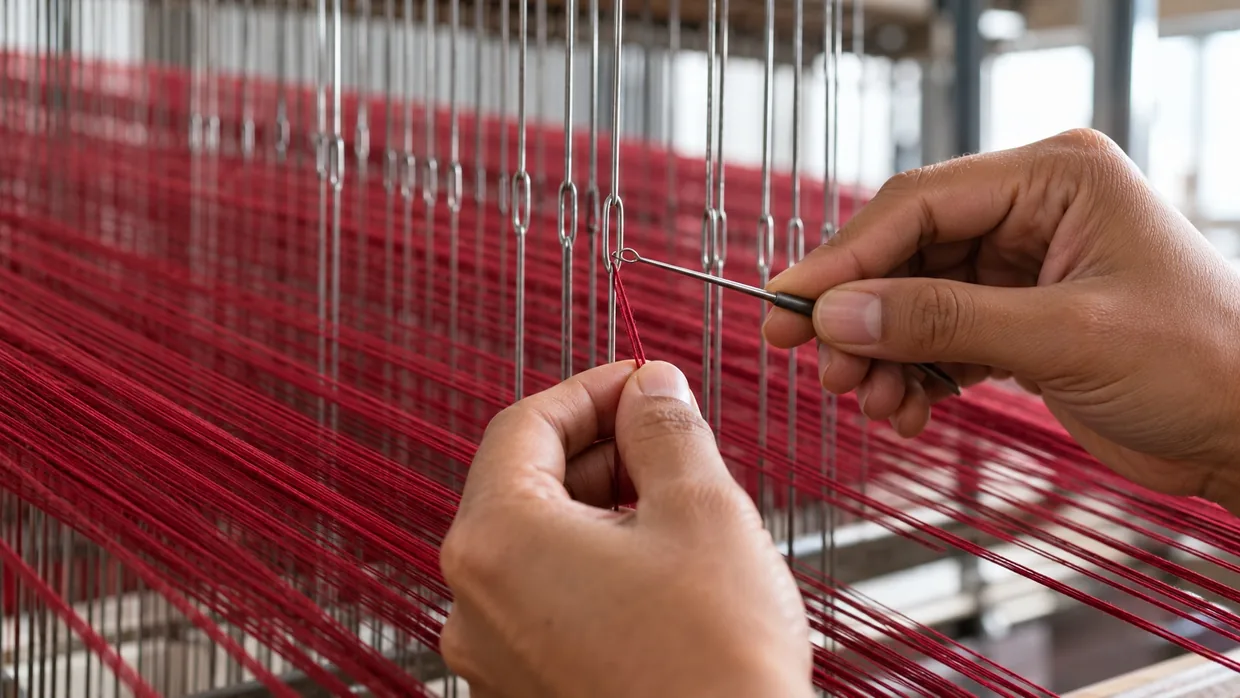
The how a loom works lesson showed the weaving cycle: the heald frames open the warp into a gap called the shed, a weft thread is laid through the shed (one crossing is called a pick), and the reed beats it into the cloth. That cycle is the same on every loom.
What changes from one loom type to another is the weft insertion, the way each pick travels from one side of the warp to the other. It sounds like a small detail, but it decides how fast the loom can run, how wide the cloth can be, which yarns it can handle and how many weft colors it can mix.
Shuttle looms: the original method
A shuttle is a boat-shaped carrier with a small spool of weft, called a pirn, inside it. The loom knocks the shuttle from one side to the other through the shed, and the weft unwinds behind it. On the way back it lays the next pick, so the weft runs continuously from edge to edge.
Because the weft turns back at each edge, a shuttle loom makes a true, closed selvedge (the finished side edge of the cloth). The downside is that the shuttle is heavy, so it cannot be thrown very fast, it is noisy, and the pirn runs out often and must be changed. Shuttle looms are now used mainly for traditional and handloom-style cloth, and in some smaller units.
Shuttleless looms: weft from a cone
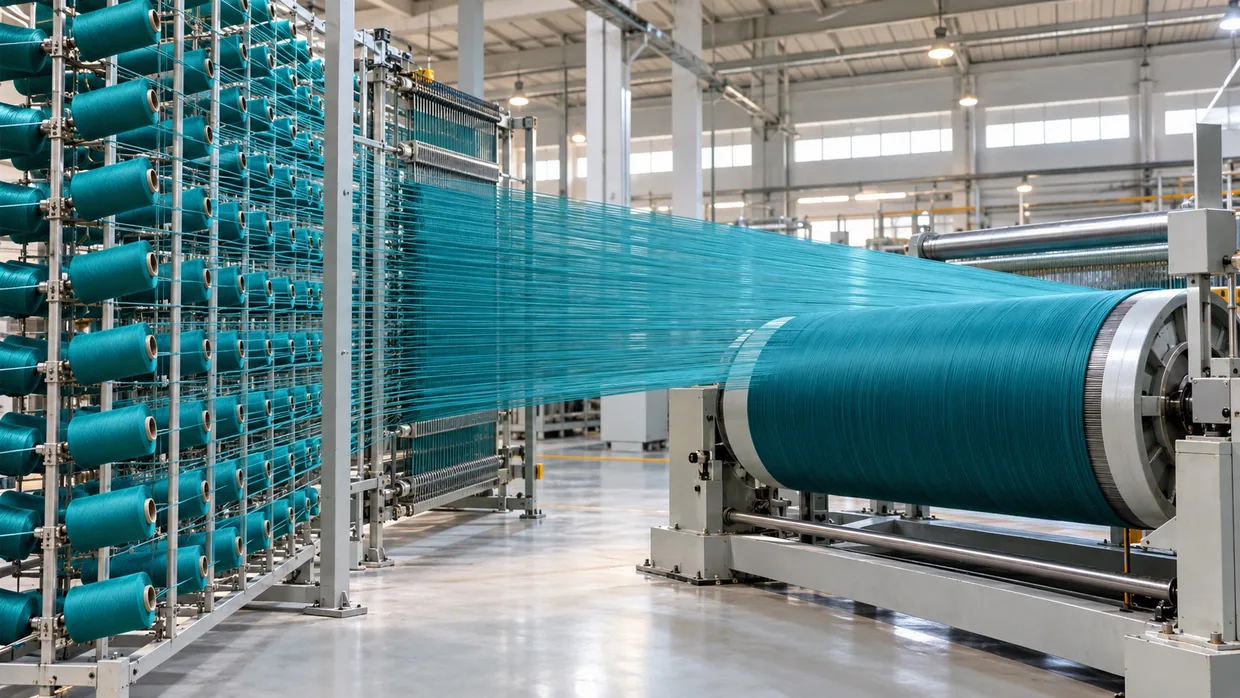
All the other types are called shuttleless looms. Instead of carrying a spool across, they pull the weft from a large cone standing beside the loom and cut it at the end of every pick. That means each pick is a separate length of yarn, so the edges are not closed by the weft turning back. To keep the selvedge tidy, the loom adds a tucked-in or locked edge, or trims off a waste strip.
Most shuttleless looms also use a weft accumulator, a small drum that measures out the length of each pick in advance, so the weft goes in at an even tension. The result is faster weaving and more uniform cloth.
Rapier, projectile, air-jet and water-jet compared
Each shuttleless type uses a different carrier to get the weft across:
- Rapier: a rigid rod or flexible tape with a gripper at its tip pulls the weft through. In the common two-rapier design, one arm carries the weft to the middle of the shed and hands it to an arm coming from the other side. Rapiers are gentle on yarn and handle a wide range of yarns, counts and weft colors, so they are known as the most versatile type.
- Projectile: a small metal gripper, the projectile, is fired across the shed and pulls the weft behind it, then is carried back underneath to be fired again. It suits very wide cloth and heavy yarns, and has a long history in wide fabrics.
- Air-jet: a main nozzle blows the weft into the shed and a row of relay nozzles along the reed keeps it moving with puffs of compressed air. Nothing solid travels across, so air-jets are the fastest common looms. They work best with even, smooth yarns, and the compressed air uses a lot of electricity.
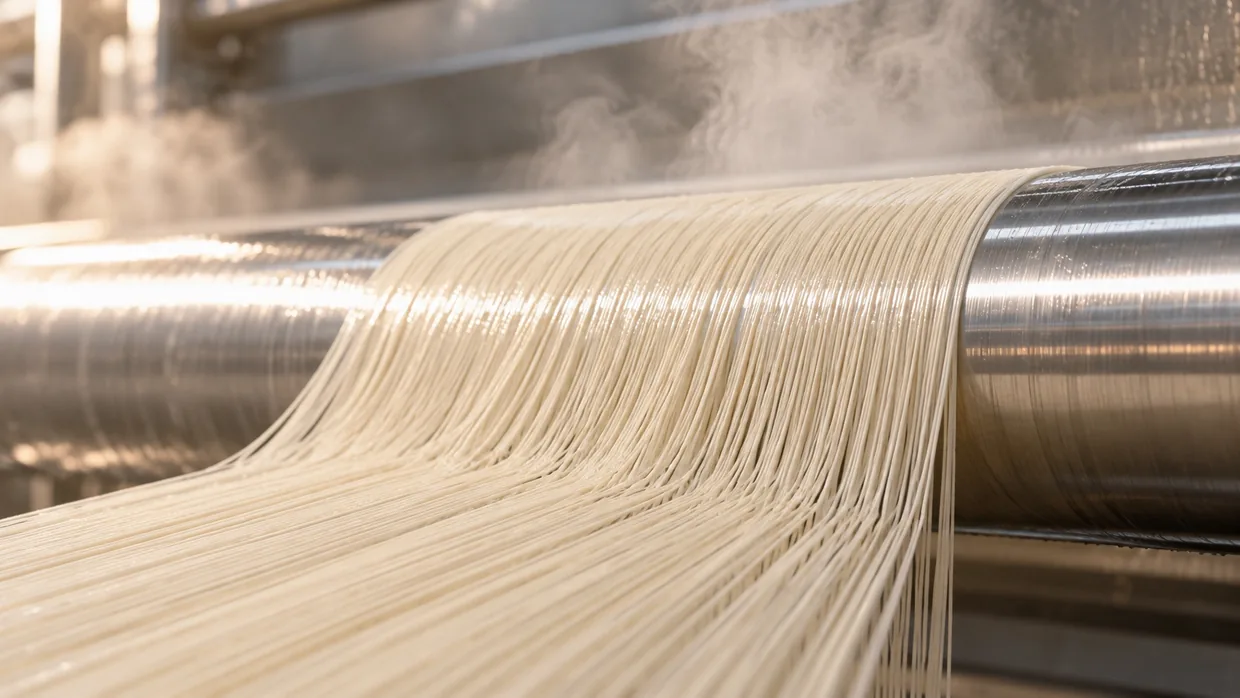
- Water-jet: a fine jet of water carries the weft across. It is fast and economical, but the yarn gets wet, so the loom only suits yarns that do not absorb water, mainly synthetic filament such as polyester and nylon.
Speed, width and yarn: the trade-offs
| Loom type | Speed | Width | Yarn suitability | Style changes |
|---|---|---|---|---|
| Shuttle | Slow | Limited | Most yarns, gentle | Simple but slow to run |
| Rapier | Medium to high | Medium to wide | Widest range, fancy and mixed wefts | Easiest, many weft colors |
| Projectile | Medium to high | Very wide | Broad range, strong on heavy yarns | Fewer weft colors than rapier |
| Air-jet | Highest | Medium to wide | Even spun and filament yarns, less suited to very heavy or fancy yarns | Best for long runs of one style |
| Water-jet | High | Medium | Water-repellent synthetic filament only | Best for long runs of one style |
Speed here is the number of picks a loom can lay per minute. Actual output also depends on the yarn, the weave and how often the loom stops for a broken end, which is why yarn quality matters so much, as our yarn quality guide explains.
Why water-jet only suits synthetic filament
A water-jet loom relies on the water staying on the outside of the yarn so it can be pushed across. Cotton and viscose are absorbent fibers: they soak up water, swell and get heavy, and the wet cloth would need drying before it could be wound. Spun yarns, made of short fibers twisted together, also have a hairy surface that holds water.
Polyester and nylon filament are smooth, continuous strands that absorb very little water, so the jet carries them cleanly and the cloth dries easily. That is why water-jet looms are found mostly where synthetic filament fabrics are woven, and are not used for cotton or poly-viscose spun-yarn cloth. Our texturised yarn in suiting guide explains filament yarns in more detail.
Which looms suit suiting, shirting and uniform cloth
There is no single right loom, but some choices are common across the industry:
- Suiting: rapier looms are widely used because suiting often has fancy wefts, checks and frequent design changes. Air-jets are used for long runs of plain or simple twill suiting.
- Shirting: air-jets suit long runs of plain and fine shirting with even yarns. Rapiers are used for yarn-dyed checks and stripes that need several weft colors, as our yarn-dyed vs piece-dyed guide describes.
- Uniform cloth: plain twills and poplins in steady colors run well on air-jet or rapier looms. Heavier workwear twills are often woven on rapier or projectile looms.
For a buyer, the loom type matters less than the result: even picks, clean selvedges and a construction that matches the sample. Our twill vs plain weave guide covers the weave choices themselves.
What to take away
All looms weave the same way. The loom type is only about how the weft crosses. Shuttle looms are slow but make a closed edge. Rapiers are the all-rounders. Projectiles go wide. Air-jets are the fastest for even yarns. Water-jets suit only synthetic filament.
Once the cloth comes off the loom it is greige fabric, and it goes on for dyeing and finishing. Our guide to woven fabric defects shows which faults start on the loom.
Next lesson: Twill vs plain weave, how the same loom makes different cloth. Browse the full course on the Textile Decoded hub.
FAQ
Frequently asked questions
- What is the difference between a shuttle and a shuttleless loom?
- A shuttle loom throws a carrier holding a spool of weft back and forth, so the weft runs continuously and forms a closed selvedge. A shuttleless loom draws weft from a cone and cuts each pick, using a rapier, projectile, air jet or water jet to carry it across. Shuttleless looms are much faster.
- Which loom type is the fastest?
- Air-jet looms are generally the fastest common type, because only air moves across the shed. Water-jet looms are also fast but only work with synthetic filament yarns.
- Why can't cotton be woven on a water-jet loom?
- Cotton absorbs water, swells and gets heavy, so the jet cannot carry it cleanly and the cloth would come off the loom wet. Water-jets suit yarns that absorb very little water, mainly polyester and nylon filament.
- Does the loom type change the quality of my fabric?
- A well-run loom of any shuttleless type can make good cloth. What matters to a buyer is the construction, even picks, clean selvedges and a match to the approved sample. You can Request Catalog at /quote to see the fabrics we weave.
Cite this guide
Quoting this page? Paste the line below so the credit links back.
<a href="https://www.bennycotts.com/guides/loom-types-shuttle-rapier-air-jet">Loom Types: Shuttle, Rapier, Air-Jet, Projectile and Water-Jet</a>, Benny Cotts, 2026Next in Weaving
Twill vs Plain Weave for Uniforms
More in Weaving
- How a Loom Works: Parts and Motions of Weaving
- Loom Types: Shuttle, Rapier, Air-Jet, Projectile and Water-Jet
- Twill vs Plain Weave for Uniforms
- Dobby Weave Structure and Chambray, Explained
- Yarn-Dyed vs Piece-Dyed Fabric, Explained
- Woven Fabric Defects: Where Each One Comes From
- Woven vs Knitted Fabric: What's the Difference?
Updated 18 October 2026 · Benny Cotts, Bhilwara
Fabrics
Fabrics mentioned in this guide
Spec, price and MOQ on every fabric page.

Nano
Poly-Viscose blend · 180-200 GSM
Our entry-level uniform fabric for large-volume programs.

Sonata
Poly-Viscose blend · 190-210 GSM
Cost-efficient uniform fabric without compromising weave quality.

Grado 1st
Poly-Viscose blend · 220-240 GSM
Tailoring-grade fabric built for everyday durability.
Industries this applies to
Uniform programs these fabrics are used for
- Fabric for Business Attire
- Fabric for Corporate Uniforms
- Fabric for Corporate Shirts
- Fabric for Corporate Trousers
- Fabric for Blazers & Waistcoats
- Fabric for School Uniforms
- Fabric for College & University Uniforms
- Fabric for Sports & PT Uniforms
- Fabric for Pre-School & Kindergarten Uniforms
- Fabric for Doctor Coats
- Fabric for Nurse Scrubs
- Fabric for Lab Coats
- Fabric for OT & Surgical Wear
- Fabric for Patient Gowns
- Fabric for Hospital Staff Uniforms
- Fabric for Chef Coats
- Fabric for Salon & Spa Uniforms
- Fabric for Cabin Crew Uniforms
- Fabric for Ground Staff Uniforms
- Fabric for Army Uniforms
- Fabric for Police Uniforms
- Fabric for Security Guard Uniforms
- Fabric for Industrial Uniforms
- Fabric for Construction Workwear
- Fabric for Housekeeping Uniforms
- Fabric for Business Suits
- Fabric for Black-Tie Attire
- Fabric for Formal Event Wear
Fabric types covered here
Keep reading
Related guides
Ready to place an enquiry?