Textile Decoded
Blends Compared: Poly-Viscose, Poly-Cotton, Cotton and Polyester
A side by side lesson on poly-viscose, poly-cotton, 100% cotton and 100% polyester fabric: feel, breathability, durability, wrinkles, shrinkage, pilling, care and best uses.

Jump to section
- Why mix fibers at all
- The four fabrics at a glance
- Side by side comparison
- Poly-viscose: the suiting and formal uniform workhorse
- Poly-cotton: the shirting and workwear choice
- Pure cotton and pure polyester: the two ends of the scale
- Coolness, washing and care: what the ratings mean in use
- Same ratio, different cloth
- Adding elastane to any of these
- Mistakes buyers make when choosing a blend
- How to choose for your use
Quick answer
Cotton is the most breathable and comfortable but wrinkles and shrinks. Polyester is the toughest and most wrinkle resistant but feels warmer and pills more. Blends sit in between. Poly-viscose (PV) gives a soft, smooth, dressy handle with good crease recovery, which is why it dominates suiting, trousers and formal uniforms. Poly-cotton (PC) gives a drier, cotton-like handle with strong wash durability, which suits shirting and workwear. Mills blend because no single fiber does everything well, and a blend lets you choose which trade-off fits the job.
Why mix fibers at all
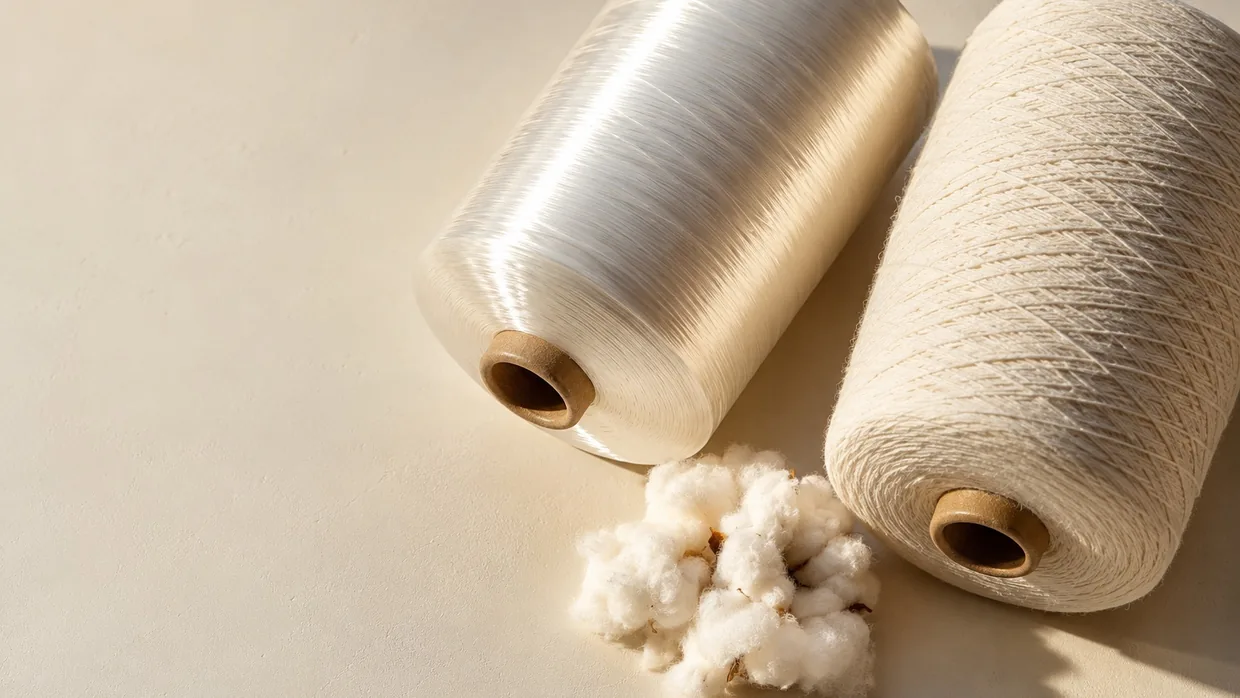
Every fiber has strengths and weaknesses. Cotton, a natural fiber from the cotton plant, is soft and absorbs sweat, but it creases easily and can shrink. Polyester, a synthetic fiber made from petrochemicals, is strong, holds its shape and dries fast, but it absorbs very little moisture, so it feels warmer on the body. Viscose, a regenerated cellulose fiber made from wood pulp, is soft, smooth and breathable, but weaker when wet.
A blend is a yarn spun from two or more fibers mixed together before spinning. The blend ratio, such as 65/35, gives the share of each fiber by weight, polyester first by trade habit. Blending lets a mill borrow the strengths of one fiber to cover the weaknesses of another. Two blends dominate uniforms and suiting in India: poly-viscose, known in the trade as TR, and poly-cotton, known as TC. The glossary entry for TR and TC explains the names.
The four fabrics at a glance
The scorecard ranks four common choices on six properties that matter most to uniform and suiting buyers. Read it as a relative ranking between these four, not an absolute grade. Weave, yarn count, GSM (grams per square metre) and finishing can move any fabric up or down a row, which is why two cloths of the same blend can still feel different.
Side by side comparison
| Property | Poly-viscose (PV) | Poly-cotton (PC) | 100% cotton | 100% polyester |
|---|---|---|---|---|
| Feel (handle) | Soft, smooth, slight sheen | Drier, matte, cotton-like | Soft, natural, matte | Smooth, can feel synthetic |
| Breathability | Good | Good | Best | Lowest |
| Durability in hard washing | Good | Very good | Fair | Very good |
| Wrinkle resistance | Very good | Good | Poor | Very good |
| Shrinkage | Low | Low | Highest unless pre-shrunk | Lowest |
| Pilling | Moderate | Moderate | Low | Most prone |
| Care | Easy; avoid harsh wet handling | Easiest for hot, frequent washing | Iron needed; cooler washes limit shrinkage | Easy; low iron, quick dry |
| Typical use | Suiting, trousers, blazers, formal uniforms | Shirting, workwear, kitchen and housekeeping | Premium shirting, hot climate wear, hospital linen | Durable suiting and trousers, high-wash uniforms |
The rows describe typical woven cloth before any special finish. An easy-care finish, for example, can improve a cotton's wrinkle behaviour, as covered in easy-care and wrinkle recovery.
Poly-viscose: the suiting and formal uniform workhorse
Poly-viscose combines polyester's shape retention with viscose's softness and drape (the way cloth hangs and falls). The result holds a trouser crease, recovers from creasing during a working day and takes dye evenly, giving deep, clean solid shades. That is why it is the default for corporate suiting, school trousers, blazers and police and security uniforms.
Its weak point is viscose's loss of strength when wet, which means viscose-heavy blends do not cope well with rough industrial laundering. The more polyester in the blend, the tougher and crisper it gets. The ratios lesson explains why 65/35 became the institutional default, and poly-viscose vs cotton for uniforms compares it with pure cotton on the job.
Poly-cotton: the shirting and workwear choice
Poly-cotton keeps much of cotton's dry, breathable feel while polyester adds strength, faster drying and lower shrinkage. It is less smooth and less dressy than poly-viscose, and it creases a little more readily at the same ratio. But it tolerates hot, frequent washing well. That makes it a strong fit for shirts, chef and kitchen wear, housekeeping and general workwear. For why 65/35 is the common shirting split, see why 65/35 poly-cotton shirting.
Pure cotton and pure polyester: the two ends of the scale
100 percent cotton is the comfort end. It absorbs moisture readily, which makes it the coolest choice in heat and the kindest to sensitive skin. Its short fibers tend to break away rather than form pills. In return it wrinkles, shrinks unless pre-shrunk (see fabric shrinkage explained) and wears faster under heavy laundering.
100 percent polyester is the durability end. It barely shrinks, resists wrinkles and abrasion, holds colour well and dries fast. In return it absorbs little moisture, so it can feel warm and clammy on long shifts, and its strong fibers anchor pills to the surface instead of letting them fall away. Modern spun polyester suiting softens much of the old synthetic feel; polyester suiting for uniforms shows where it works. For why pills form at all, read fabric pilling explained.
Coolness, washing and care: what the ratings mean in use
Coolness is about moisture, not weight alone. Cotton and viscose are absorbent: they take sweat off the skin and let it evaporate, so the cloth feels dry and cool. Polyester absorbs very little, so sweat stays on the skin and the cloth feels warmer, even though polyester dries fast once it is off the body. In a blend, more cotton or viscose makes a cooler cloth and more polyester makes a warmer one. That is why a 65/35 and a 50/50 of the same weave can feel noticeably different in a hot kitchen or a June classroom.
Wash strength is how many hard cycles a cloth survives before it fades, thins or loses its shape. Polyester and poly-cotton hold up best under hot, frequent, commercial washing. Cotton loses strength with repeated harsh washing and shrinks. Viscose is the weak link when wet, so a viscose-rich blend suits careful laundering better than a hard industrial wash. If your uniforms go to a commercial laundry, say so when you specify. Our guide to uniform fabric care and washing instructions covers what to put on the care label.
Wrinkles and shrinkage follow the same logic. Polyester resists creasing and barely shrinks, so more polyester means less ironing and more stable sizing. Cotton creases and, unless pre-shrunk, shrinks. Pilling runs the other way: polyester is the most prone and cotton the least. So the cloth that is easiest to care for is also the one most likely to pill, and no single blend wins every row. The art is choosing which row matters most for the job.
Same ratio, different cloth
A ratio tells you the fibers, not the cloth. Two fabrics that are both 65/35 poly-viscose can differ a lot because of three other choices. The first is weave: a plain weave is crisp and light, while a twill is denser, drapes better and hides wear and soil. The second is weight: a heavier cloth is warmer and lasts longer, a lighter one is cooler but less durable. The third is the yarn and finish: finer, better prepared yarn gives a smoother surface and less pilling, and the finish decides crispness, shine and crease behaviour.
So when you compare two quotes, compare weave, GSM, yarn count and finish as well as the ratio. A cheaper cloth with the same ratio is often lighter, coarser or less carefully finished. Start with what GSM means and yarn counts and blends explained if those terms are new.
Adding elastane to any of these
Any of the four can carry a small share of elastane, the fiber sold as Lycra or spandex, to give stretch. It does not replace the base blend. The base still decides coolness, wash strength and wrinkle behaviour, and the elastane only adds give. A stretch poly-viscose is still a poly-viscose in how it hangs and washes.
Three practical points. Say how much elastane and in which direction, because a trouser needs give across the width more than along the length. Elastane dislikes high heat and chlorine bleach, so pressing and laundry instructions matter more on stretch cloth. And test recovery, not just stretch: a cloth that extends but does not spring back will bag at the knee. For a shirt or plain trouser that never needs to flex, stretch is cost with no benefit. The full detail is in stretch and Lycra uniform fabric.
Mistakes buyers make when choosing a blend
- Treating poly-viscose and poly-cotton as interchangeable. They differ in handle, drape and how they take hard washing.
- Specifying a viscose-rich blend for hot industrial laundering, then finding it wears thin.
- Choosing 100 percent polyester on durability alone for a hot, humid job, then hearing complaints about heat.
- Comparing quotes on the ratio only, without GSM, weave and finish.
- Skipping test results. Ask for shrinkage, pilling and colour fastness on the actual cloth, not on a similar one.
- Forgetting that the ratio is by weight. Ask that the fiber composition be stated on the spec sheet or test report.
How to choose for your use
- Formal suiting, trousers and blazers: poly-viscose, or polyester where washing is very hard.
- Office and school shirting: poly-cotton for easy care, cotton for comfort in heat.
- Kitchen, housekeeping and industrial wear washed hot and often: poly-cotton or a polyester-rich blend.
- Long shifts in hot, humid climates: choose more cotton or viscose; see uniform fabric for hot, humid climates.
- Any stretch need: add a little elastane to the base blend, as in stretch and Lycra uniform fabric.
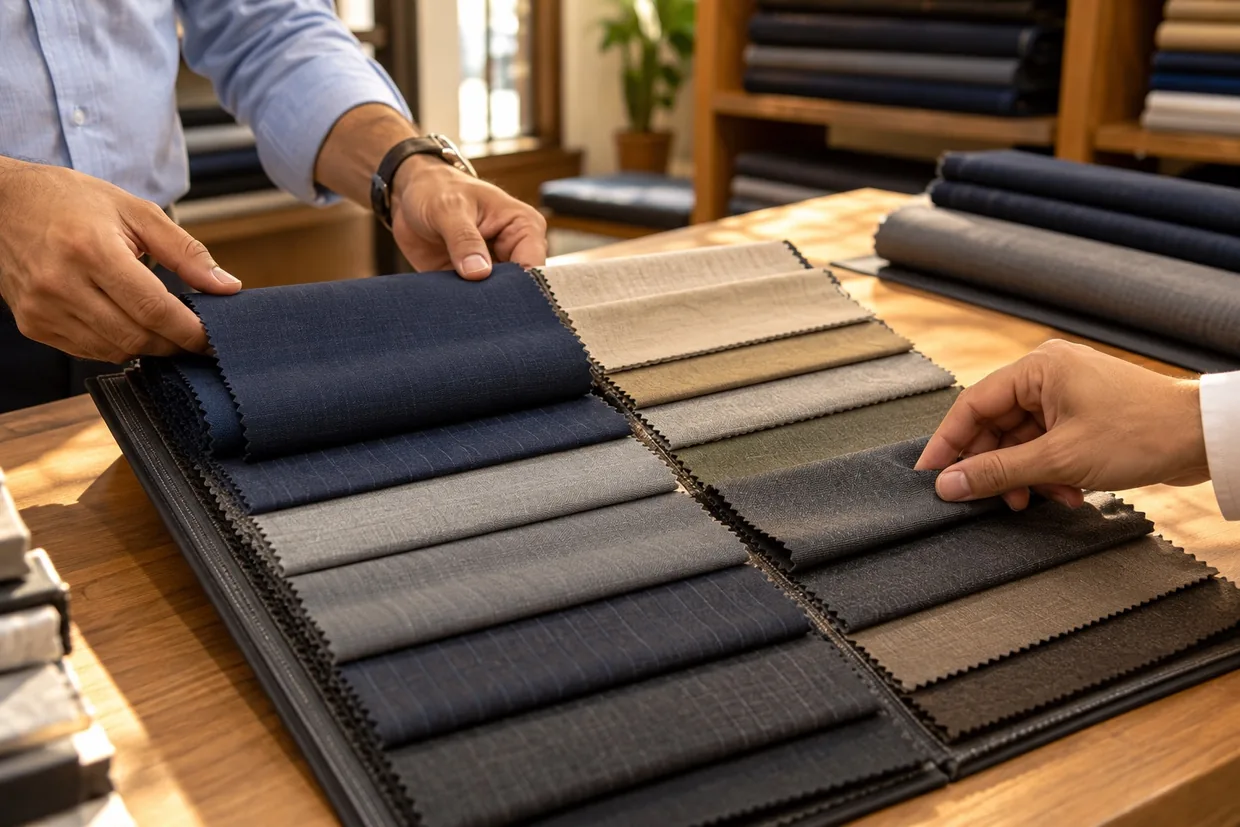
That closes Module 1 on fibers. Module 2 follows the fiber into yarn, starting with how a spinning mill works. To feel these blends in hand, Request Catalog from our quote page.
FAQ
Frequently asked questions
- Is poly-viscose better than poly-cotton?
- Neither is better overall. Poly-viscose is smoother, softer and dressier, so it suits suiting, trousers and formal uniforms. Poly-cotton is drier, more matte and handles hot, frequent washing better, so it suits shirting and workwear. Choose by garment and washing regime.
- Which is cooler to wear in summer, cotton or poly-viscose?
- Cotton is the coolest of the four because it absorbs moisture readily. Poly-viscose comes next, because viscose is also absorbent, and it is still far cooler than 100 percent polyester. Lighter GSM and an open weave help any of them.
- Why does polyester fabric pill more than cotton?
- Pills form when loose fiber ends tangle into small balls on the surface. Cotton fibers are weaker, so pills tend to break off and fall away. Polyester fibers are strong, so the pills stay anchored and build up. Blends sit in between.
- Will a poly-cotton uniform shrink in the wash?
- Much less than pure cotton, because polyester barely shrinks and holds the cloth stable. Some leftover shrinkage is normal, and a shrinkage test result on the spec sheet tells you what to expect. Follow the care label on temperature.
- Why do two 65/35 fabrics feel different?
- Because the ratio only names the fibers. Weave, GSM, yarn quality and finish all change handle, drape and wear. A denser twill at a higher GSM will feel different from a light plain weave at the same ratio, so compare those details as well.
- Does adding elastane change which blend I should pick?
- Not really. The base blend still decides coolness, wash strength and wrinkle behaviour. Elastane adds give on top of it, so choose the base for the job first, then decide whether the garment needs stretch and in which direction.
- What does a ratio like 65/35 mean?
- It is the share of each fiber by weight in the yarn, with polyester listed first by trade habit. A 65/35 poly-viscose is 65 percent polyester and 35 percent viscose. The ratio is fixed at spinning, so it runs through every thread of the cloth.
Cite this guide
Quoting this page? Paste the line below so the credit links back.
<a href="https://www.bennycotts.com/guides/fabric-blends-compared-pv-pc-cotton-polyester">Blends Compared: Poly-Viscose, Poly-Cotton, Cotton and Polyester</a>, Benny Cotts, 2026Next in Fibers
Poly-Viscose vs Cotton for Uniforms: 7 Differences
More in Fibers
- What Is a Fiber? Natural, Man-Made and Synthetic
- Cotton: From Field to Bale
- Polyester: From Crude Oil to Fiber
- Viscose: Fiber From Wood Pulp
- Wool, Linen, Nylon and Elastane: The Rest of the Fiber Family
- What Moves Fiber Prices: Cotton, Polyester and Viscose
- Blends Compared: Poly-Viscose, Poly-Cotton, Cotton and Polyester
- Poly-Viscose vs Cotton for Uniforms: 7 Differences
- Poly-Viscose and Poly-Cotton Ratios Explained: The Manufacturing Reasons Behind Each Blend
- Why 65/35 Is a Common Ratio for Uniform Shirting
- 100% Polyester Suiting for Uniforms: Where It Wins and Where It Loses
- Stretch and Lycra Uniform Fabric, Explained
Updated 25 October 2026 · Benny Cotts, Bhilwara
Fabrics
Fabrics mentioned in this guide
Spec, price and MOQ on every fabric page.

Officer Choice
Poly-Viscose (PV) blend · 210-230 GSM
Crisp, structured suiting engineered for officer uniforms.

Power Gold
Premium Poly-Viscose blend · 230-250 GSM
Our premium-line suiting with a refined hand and superior drape.

Cambery
Poly-cotton blend · 150-180 GSM
Chambray-style fabric with a soft, breathable finish.

Spun Shirting
Micro 1/40s spun polyester · 67 GSM
Lightweight micro shirting, spun 1/40s count, in 74 shades.
Industries this applies to
Uniform programs these fabrics are used for
- Fabric for Business Attire
- Fabric for Corporate Shirts
- Fabric for Corporate Trousers
- Fabric for Blazers & Waistcoats
- Fabric for Pre-School & Kindergarten Uniforms
- Fabric for Nurse Scrubs
- Fabric for OT & Surgical Wear
- Fabric for Patient Gowns
- Fabric for Chef Coats
- Fabric for Waiter Uniforms
- Fabric for Salon & Spa Uniforms
- Fabric for Cabin Crew Uniforms
- Fabric for Ground Staff Uniforms
- Fabric for Army Uniforms
- Fabric for Police Uniforms
- Fabric for Security Guard Uniforms
- Fabric for Industrial Uniforms
- Fabric for Construction Workwear
- Fabric for Business Suits
- Fabric for Black-Tie Attire
- Fabric for Formal Event Wear
Fabric types covered here
Keep reading
Related guides



Ready to place an enquiry?