
Textile Decoded
What Moves Processing Costs: Dyes, Energy, Water, Shade and Lot Size
A beginner's lesson on what sets the cost of dyeing and finishing fabric: dyes and chemicals, steam and heat, water and effluent rules, shade depth, blends that need two dye types, finish add-ons, lot size and reprocessing.
Jump to section
Quick answer
Processing turns greige (unfinished cloth off the loom) into dyed, finished fabric, and its cost is built from what goes into the cloth and what it takes to run the machines. Dyes and chemicals are the materials; steam, heat and power run the process; water has to be supplied and then treated before it can be released. On top of that, the order itself moves the cost. Darker shades need more dye. Blends like poly-viscose need two kinds of dye. Special finishes add steps. Small lots carry the same setup work as large ones. Any batch that misses the shade has to be processed again.
Why processing cost matters to a fabric buyer
After weaving, cloth is grey and stiff. A process house cleans it, dyes or prints it, and finishes it so it handles, shrinks and wears the way a buyer expects. That work is a real share of what finished fabric costs, and it is the share most affected by the choices a buyer makes: the shade, the finish and the size of the order.
In the earlier lessons you saw what moves fiber prices and what moves yarn prices. This lesson covers the last big block before cloth is sold. At Benny Cotts we weave in-house at Village Atoon in Bhilwara, and dyeing, processing, finishing and testing happen at partnered Bhilwara process houses, so these are costs we see on every order.
Dyes and chemicals
Dyes are the obvious material, but cloth also needs a long list of chemicals: agents to remove the starch added before weaving, detergents and alkali to scour out oils and dirt, bleach for whites and bright shades, salt and alkali to help some dyes fix, and softeners or resins at the finishing stage.
Many dyes and chemicals are made from petrochemical raw materials, so their cost tends to follow crude oil and the chemical industry. Some are imported, so currency rates and duties also matter. Different dye classes also cost differently to buy and to apply, and some colours, such as certain bright or fast shades, need dyes that are dearer than the everyday ones.
Energy: steam, heat and power
Most wet processing happens in hot water, and much of the heat comes from steam made in a boiler. The fuel for that boiler, whether coal, biomass, gas or another source, is one of a process house's largest running costs, so a change in fuel prices moves processing cost directly.
Polyester needs more heat than cotton or viscose. Its usual dyes, called disperse dyes, only enter the fiber at high temperature, so polyester is dyed in sealed machines under pressure, or with very high dry heat. Polyester fabric is also heat-set on a stenter (a long frame that holds the cloth to width while hot air passes over it) so it keeps its size and shape. Drying and finishing every fabric uses heat as well. Electricity runs the pumps, motors and frames on top of that.
Water and effluent rules
Wet processing uses a lot of water for washing, dyeing and rinsing. The water has to be sourced and often softened first, because hard water spoils shades. Afterwards this waste water (effluent) carries leftover dye, salt and chemicals, and it has to be treated before release.
Pollution control rules decide how clean that effluent must be. Where rules require zero liquid discharge, meaning treated water is recycled and the salts are recovered rather than released, the treatment plants cost more to build and run. Tighter rules, or tighter enforcement, raise what process houses spend on treatment, and that feeds into processing charges.
Shade depth and blends
A dark shade needs much more dye than a light one on the same cloth. Navy, black and deep maroon use more dye, often more chemicals to fix it, and more washing afterwards to clear the loose dye so the colour does not bleed or rub off. Very light and bright shades have their own cost: the cloth usually has to be bleached to a clean white base first. Pale pastels can also be harder to match evenly.
Blends add a layer. Polyester takes disperse dye, while viscose and cotton take different dye classes such as reactive dyes. A poly-viscose or poly-cotton fabric therefore needs both kinds, applied in two stages or with a special process, which takes more time, heat and care than dyeing a single fiber. The blends comparison explains why these blends are so common despite that. Dyeing yarn before weaving is a different route again, covered in yarn-dyed vs piece-dyed.
Finish add-ons
Every fabric gets a basic finish, such as softening and stentering to width. Extra performance finishes add chemicals, passes through the machine and testing. Common ones include shrinkage control such as sanforizing (a mechanical step that pre-shrinks cloth), water, oil and stain repellence, anti-static, anti-microbial and fire retardant finishes.
Each one is an extra cost line, and some need specialist chemicals or certified testing to back the claim. The lessons on technical finishes and fire retardant, anti-microbial and moisture control finishes explain what each does, so you can decide which ones your use actually needs.
Lot size, minimums and reprocessing
Every dye batch has fixed work around it: loading the machine, matching the shade, sampling, cleaning the machine before the next colour, and testing. That work is roughly the same for a small lot as for a large one, so a small lot carries more of it per metre. Machines also have a sensible minimum load. This is the main reason process houses, and the mills that use them, set minimum order quantities per shade.
Reprocessing is the hidden cost. If a batch misses the approved shade, or comes out uneven, it has to be corrected by adding dye, or stripped and dyed again. That uses more dye, water, energy and machine time, and it can weaken the cloth. Clear shade approval up front, through lab dips, and realistic tolerance between batches, covered in dye lot consistency, keep reprocessing down.
What this means when you buy
- Expect dark and bright shades to be priced differently from mid shades, and blends differently from single fibers.
- Ask only for the finishes your use needs. Each one adds a step and a test.
- Group your shades. Fewer colours in larger lots cost less to process than many small lots.
- Approve shades clearly and early, with an agreed tolerance, so batches are not reprocessed.
- Read what a quote assumes about shade and finish; understanding fabric quotations shows how these fit together.
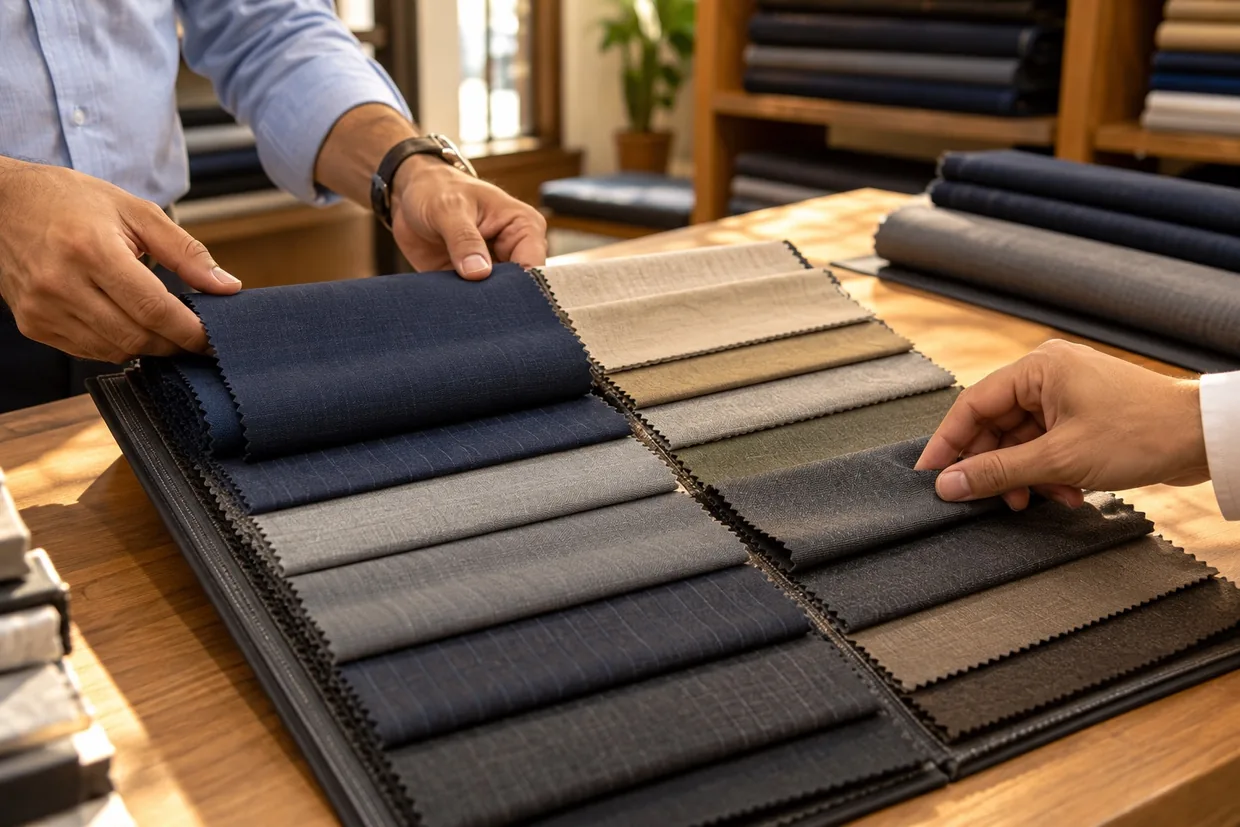
When you are ready to see finished cloth in real shades, Request Catalog from our quote page.
FAQ
Frequently asked questions
- Why does a dark shade cost more than a light one?
- A dark shade needs much more dye on the same cloth, often more chemicals to fix it, and more washing afterwards so the colour does not bleed or rub off.
- Why is a poly-viscose blend harder to dye than plain polyester?
- Polyester and viscose take different dye classes. A blend needs both, applied in two stages or with a special process, which adds time, heat and care.
- Why do processing costs change when cotton and polyester prices have not?
- Processing has its own inputs: dyes and chemicals, boiler fuel, power, water and effluent treatment. A change in fuel prices or pollution control rules can move processing cost while fiber is flat.
- Does Benny Cotts dye fabric in-house?
- No. We weave in-house at Village Atoon in Bhilwara. Dyeing, processing, finishing and testing are done at partnered Bhilwara process houses. To see finished shades, Request Catalog at /quote.
Cite this guide
Quoting this page? Paste the line below so the credit links back.
<a href="https://www.bennycotts.com/guides/what-moves-processing-costs">What Moves Processing Costs: Dyes, Energy, Water, Shade and Lot Size</a>, Benny Cotts, 2026More in Processing
- What a Process House Does: Greige to Finished Fabric
- Dyeing: Which Dye for Which Fiber
- Lab Dips and Shade Approval, Explained
- Why Reorders Do Not Match: Dye-Lot Consistency
- Fabric Swatches vs Shade Cards Explained
- Fire-Retardant, Anti-Microbial and Moisture-Control Finishes Explained
- Water-Repellent, Oil-Repellent and Anti-Static Finishes Explained
- Easy-Care and Wrinkle Recovery in Shirting, Explained
- Why Uniforms Shrink, and How to Prevent It
- Does Viscose Pill? Uniform Fabric Pilling and How to Spec It
- Why Uniforms Fade: Colour Fastness and Hot Washing
- Why White Shirts Go Yellow or Grey, and How to Spec Against It
- What Moves Processing Costs: Dyes, Energy, Water, Shade and Lot Size
Updated 18 October 2026 · Benny Cotts, Bhilwara
Fabrics
Fabrics mentioned in this guide
Spec, price and MOQ on every fabric page.

Officer Choice
Poly-Viscose (PV) blend · 210-230 GSM
Crisp, structured suiting engineered for officer uniforms.

Power Gold
Premium Poly-Viscose blend · 230-250 GSM
Our premium-line suiting with a refined hand and superior drape.

Spun Shirting
Micro 1/40s spun polyester · 67 GSM
Lightweight micro shirting, spun 1/40s count, in 74 shades.
Industries this applies to
Uniform programs these fabrics are used for
- Fabric for Business Attire
- Fabric for Corporate Shirts
- Fabric for Corporate Trousers
- Fabric for Blazers & Waistcoats
- Fabric for Cabin Crew Uniforms
- Fabric for Ground Staff Uniforms
- Fabric for Army Uniforms
- Fabric for Police Uniforms
- Fabric for Security Guard Uniforms
- Fabric for Industrial Uniforms
- Fabric for Construction Workwear
- Fabric for Business Suits
- Fabric for Black-Tie Attire
- Fabric for Formal Event Wear
Fabric types covered here
Keep reading
Related guides



Ready to place an enquiry?