
Fabric basics
Why White Shirts Go Yellow or Grey, and How to Spec Against It
Three separate reasons a white uniform shirt stops looking white, how to tell them apart on the garment, and which of them is a fabric question and which is a laundry one.
Jump to section
- Three failures that look like one complaint
- Optical brightener, and why new white looks so white
- Chlorine, polyester and yellow that will not come out
- Grey is a process fault, and it is the most fixable one
- What to actually specify, and what to ask the laundry
- White can be specified as a number, not only as a swatch
Quick answer
A white uniform shirt fails in three different ways, and each needs a different fix. If it looks dull and faintly creamy across the whole garment, the optical brightener (a finish that makes white look whiter) has washed out. The fix is a laundry brightener in the wash, not a new fabric. If it looks yellow, worst at the collar, cuffs and underarms, chlorine bleach has reacted with the polyester in the blend. It sets a yellow that more bleaching makes worse, so the fix is oxygen bleach and a lower wash temperature. If it looks an even, flat grey, dirt loosened in the wash has settled back onto the cloth. The cause is an overloaded machine, too little detergent or too few rinses. Only the yellowing case has anything to do with the fiber you bought. It is worth planning the wash protocol around it from day one, because chlorine yellowing on polyester is effectively permanent.
Three failures that look like one complaint
Fading on a coloured uniform is a single mechanism: dye leaves the fiber. White is different, because there is no dye to lose. A white shirt goes off-white by gaining something it should not have, or by losing a finish rather than a colour. The three causes have nothing in common except the complaint they produce.
Getting the diagnosis right matters commercially. A hospital or hotel may decide the cloth is at fault and change supplier. If the cause was in the laundry, the same problem will return on the new cloth. A mill that accepts a rejection for a laundry fault has accepted the wrong thing. The good news is that the three are easy to tell apart on the garment, before anyone argues about it.
- Dull and creamy, even across the whole garment, appears gradually over many washes: optical brightener has washed out
- Yellow, concentrated at collar, cuffs and underarms, often appears suddenly after a bleach cycle: chlorine on polyester
- Flat grey, even across the garment and often across the whole load: soil redeposition in the wash
- Yellow or brown spots in a scattered pattern: not any of the three, this is rust, iron in the water or product residue, and it is a plant problem
Optical brightener, and why new white looks so white
Most white uniform cloth is not just undyed. It carries an optical brightening agent, applied at the finishing stage. This compound absorbs invisible ultraviolet light and sends it back as faint blue. Blue cancels the yellow cast that raw fiber has, so the cloth looks brighter than a truly neutral white could. It is a legitimate finish used across the industry. It is why a new white shirt looks so clean next to one that has been in service for a year.
The catch is that a brightener is a finish, not a permanent property of the fiber. It leaves gradually with washing, faster with hot water and strong alkaline detergents. So a white shirt turning dull cream over six months of institutional laundering is behaving as the chemistry says it will. It is not a sign of poor cloth.
The fix is on the laundry side. Detergents made for whites carry their own brightener and put back part of what the wash removes. This is why a hospital laundry using a whites-specific detergent keeps its coats looking newer than one washing everything on a single generic cycle. Bleaching harder to compensate will not work, because chlorine bleach destroys brightener and leads to the second failure instead.
Chlorine, polyester and yellow that will not come out
This is the one real fiber interaction on the list. It is why a uniform program with polyester whites needs its wash protocol settled before the first order. Chlorine bleach, meaning ordinary sodium hypochlorite, does not just fail to whiten polyester. It reacts with the polyester, and with any finish or optical brightener left on it, and leaves a yellow that is chemically set into the fiber. More bleach makes it worse, not better, yet that is exactly what a frustrated laundry will try.
Heat speeds it up, which is why the yellowing usually appears first at the collar, cuffs and underarms. Those areas hold body soil and sebum, get pre-treated more strongly, and see the most rubbing in the machine, so they get the highest effective dose. A shirt with a yellow band around the collar and a cleaner body shows the mark of chlorine. It is not a shade issue.
The alternative is oxygen bleach, based on hydrogen peroxide or sodium percarbonate. It is gentler and will not set yellow into polyester. It needs a longer contact time and a correctly set temperature to do the same job, so a laundry switching over has to adjust the cycle, not just swap the bottle. This applies to blends with a good share of polyester, which covers most uniform whites, including our poly-viscose shirtings and the dyed polyester qualities used in hospital programs. The adjustment is worth making once, permanently.
- Use oxygen bleach on polyester and poly-viscose whites, not chlorine bleach
- Keep wash temperature within the fabric's stated range, since heat drives both the yellowing and the brightener loss
- Treat collar, cuff and underarm soil with a pre-spotter rather than a heavier bleach dose
- Never raise the bleach dose in response to yellowing that bleach caused
- Once yellowing is set into polyester, accept that the garment will not come back and replace it
Grey is a process fault, and it is the most fixable one
An even grey cast across a whole load is soil redeposition. The wash loosened dirt off the garments, and with nowhere to go, it settled back onto the cloth in a thin even layer. It is a machine and dosing problem. It is the failure most often blamed on the fabric, because it looks as if the cloth has simply gone dingy.
Three things cause it, and all three are in the laundry's control. An overloaded machine leaves too little water and too little space to move, so dirt cannot be carried away. Too little detergent means there is not enough surfactant (the cleaning agent) to hold dirt in the water. And too few rinse cycles, or rinses at too low a water level, leave dirty water sitting on the cloth when the drum drains.
A buyer should care because greying can nearly always be reversed in the first weeks and is much harder to reverse later, as each cycle adds another layer. A hospital or hotel laundry that catches the grey early and corrects load size and dosing will usually recover the whites. Left for a season, the same garments turn mid-grey and no wash protocol brings them back.
What to actually specify, and what to ask the laundry
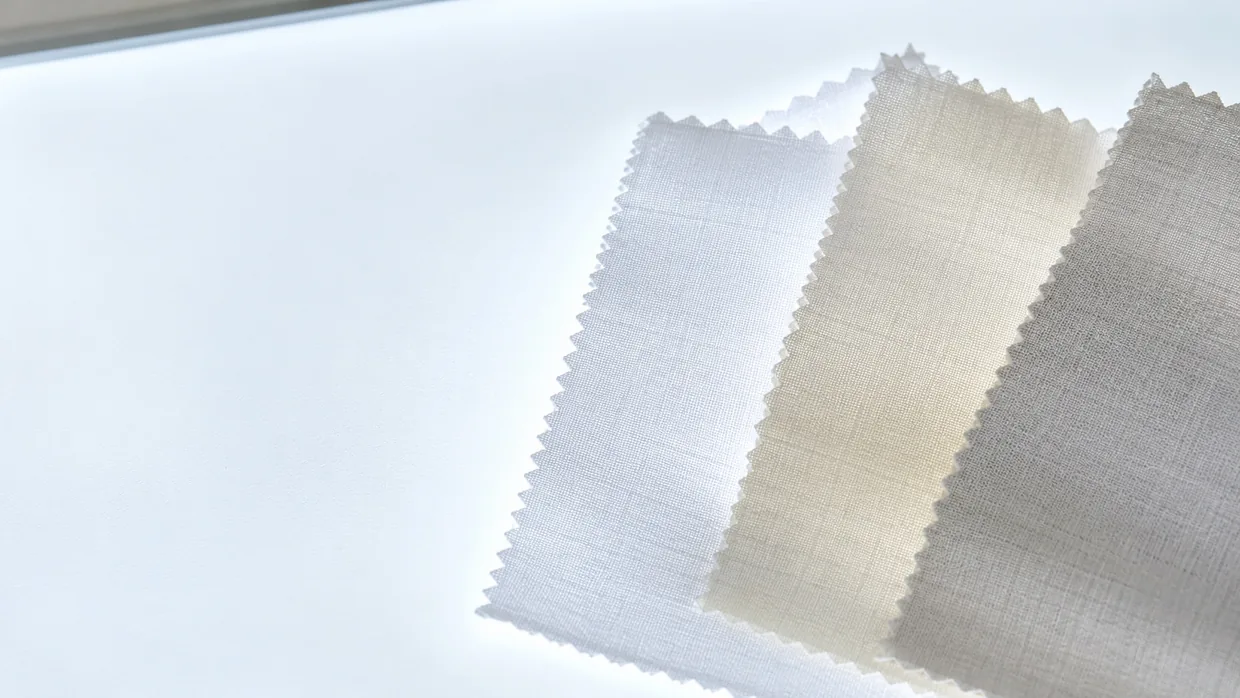
On the fabric side, the specification for whites is short. Ask for a white with an optical brightener and record it on the spec sheet. Then a reorder will not arrive as an unbrightened white that looks yellow next to the existing stock on day one. Ask for the fiber composition in writing, because it decides which bleach the laundry can use. Ask for the stated maximum wash temperature and follow it. And ask the mill to hold a physical reference swatch of the white on file, as you would for a coloured shade. Whites drift between lots too, and matching a white by eye is harder than matching a navy.
On the laundry side, the questions are just as short. Which bleach is in use, chlorine or oxygen? What is the wash temperature actually, not what the policy says? Do whites run separately from colours? A mixed load is where both greying and dye pickup come from. And is the detergent a whites formulation carrying its own brightener?
Where a program runs across many sites, put those four laundry answers in the contract with the laundry, not in a note to the uniform vendor. The cloth cannot enforce a wash protocol, and no white cloth on the market survives a chlorine cycle on polyester.
- Specify white with optical brightener, in writing, and reorder against a reference swatch
- Record the fiber composition, so the laundry knows chlorine is off the table on polyester blends
- Record the maximum wash temperature and hand the number to the laundry, not to the tailor
- Run whites as their own wash classification, separate from coloured uniforms
- Build in a replacement cycle for whites, since brightener loss is gradual and cumulative
White can be specified as a number, not only as a swatch
Everything above is the descriptive version, and it is enough for most programmes. Where a white is still argued about after the second or third lot, there is a numeric route. It uses the same instrument the mill already uses for coloured shades.
Whiteness can be measured with an instrument. ISO 105-J02 covers the instrumental assessment of relative whiteness. The usual result is a CIE whiteness value under D65 illumination (a standard daylight setting), together with a tint value. Both numbers matter. Whiteness says how white the cloth is. Tint says which way it leans. Two cloths can have the same whiteness, yet one looks faintly pink and the other faintly green next to it. A specification that names a whiteness figure but no tint tolerance leaves out the half of the problem that people actually notice.
There is one trap specific to brightened whites. It is why two laboratories can report different numbers for the same cloth. An optical brightener works by fluorescing (glowing under UV), so the reading depends on how much ultraviolet the instrument shines on the specimen. A spectrophotometer with its UV component included and one with it filtered out will not agree on a brightened white, and neither is wrong. So a whiteness figure can be repeated only if the UV condition is stated with it. Where brightener levels are high, the Ganz-Griesser method is usually named instead. It has to be calibrated on the instrument before it means anything.
The practical advice for a buyer: keep the reference swatch as the main standard, because everyone can see it. Add the instrument figure as the tie-breaker for the argument the swatch cannot settle. Write down the illuminant, the whiteness value, the tint tolerance and the UV condition. The reorder conversation then stops being a matter of opinion. This is the same logic as lab dips and shade approval for a coloured shade, and the dye lot consistency discipline is unchanged: a white is a shade.
Our position is the same as for every physical test. Weaving is in-house at Village Atoon. Dyeing, finishing and testing run through partnered processing houses in Bhilwara, not an accredited laboratory of our own. So where a programme needs a whiteness figure on record against ISO 105-J02, we will say which independent laboratory it should come from. What we can hold is the reference swatch. For a white this is worth more than it sounds, because matching a white by eye is harder than matching a navy.
FAQ
Frequently asked questions
- Can a white be specified as a number rather than argued about against a swatch?
- Yes. ISO 105-J02 covers instrumental assessment of relative whiteness. The result is a CIE whiteness value under D65 plus a tint value. Specify both, because two cloths can have the same whiteness and still lean visibly pink or green. One condition has to be stated with the figure. An optical brightener fluoresces, so the reading depends on how much ultraviolet the instrument shines on the specimen. A UV-included and a UV-filtered measurement will not agree on a brightened white. Keep the reference swatch as the main standard and use the number as the tie-breaker.
- Why do white uniform shirts turn yellow after washing?
- The most common cause on polyester and poly-viscose whites is chlorine bleach. It reacts with the fiber and sets a yellow that more bleaching only deepens. It shows first at collars, cuffs and underarms because those areas see the most heat, soil and pre-treatment. Switch the laundry to oxygen bleach and keep the wash temperature within the fabric's stated range.
- Can yellowed polyester whites be recovered?
- Generally no. Chlorine yellowing is chemically set into the fiber rather than sitting on the surface, and stronger bleaching makes it worse. Once a batch has gone yellow the practical answer is to replace those garments and fix the wash protocol so the next batch does not follow them.
- What is the difference between a shirt going grey and a shirt going yellow?
- Grey is even across the whole garment and usually across the whole load. It is dirt that was loosened in the wash and settled back onto the cloth, caused by overloading, too little detergent or too few rinses. Yellow is concentrated at collars, cuffs and underarms and comes from chlorine reacting with polyester. Grey can often be recovered if caught early. Yellow cannot.
- What is an optical brightener and does it wash out?
- It is a finish applied at processing. It absorbs ultraviolet light and sends it back as faint blue, cancelling the natural yellow cast of the fiber so the cloth looks brighter than a neutral white. It is a finish, not a fiber property, so it does wash out gradually, faster in hot and strongly alkaline cycles. A whites-specific detergent carrying its own brightener puts back part of what each wash removes.
- Is going off-white a fabric defect I can raise with the mill?
- It depends which failure you have. A delivered lot that is visibly less white than the approved reference swatch is a real deviation and belongs in your inspection report. Brightener loss over months of laundering, chlorine yellowing and soil redeposition all come from the wash protocol during use. No cloth is specified to survive a chlorine cycle on polyester.
- Which fabrics do you supply for white uniform programs?
- Our published shade cards are built around institutional colours, not whites. So a white is normally woven and processed to your own approved reference instead of being picked off a card. The cloth is woven at our own unit in Atoon, Bhilwara and finished through partnered processing houses in the region. We hold the physical reference swatch of your approved white on file, so reorders are matched to it and not to the last delivery. Tell us the shade card number or sample you are matching. Also tell us your laundry's bleach system, since that changes which construction and finish we would use.
Cite this guide
Quoting this page? Paste the line below so the credit links back.
<a href="https://www.bennycotts.com/guides/white-shirting-yellowing-and-greying">Why White Shirts Go Yellow or Grey, and How to Spec Against It</a>, Benny Cotts, 2026Next in Processing
What Moves Processing Costs: Dyes, Energy, Water, Shade and Lot Size
More in Processing
- What a Process House Does: Greige to Finished Fabric
- Dyeing: Which Dye for Which Fiber
- Lab Dips and Shade Approval, Explained
- Why Reorders Do Not Match: Dye-Lot Consistency
- Fabric Swatches vs Shade Cards Explained
- Fire-Retardant, Anti-Microbial and Moisture-Control Finishes Explained
- Water-Repellent, Oil-Repellent and Anti-Static Finishes Explained
- Easy-Care and Wrinkle Recovery in Shirting, Explained
- Why Uniforms Shrink, and How to Prevent It
- Does Viscose Pill? Uniform Fabric Pilling and How to Spec It
- Why Uniforms Fade: Colour Fastness and Hot Washing
- Why White Shirts Go Yellow or Grey, and How to Spec Against It
- What Moves Processing Costs: Dyes, Energy, Water, Shade and Lot Size
Updated 23 August 2026 · Benny Cotts, Bhilwara
Fabrics
Fabrics mentioned in this guide
Spec, price and MOQ on every fabric page.

Super Fine 9952
100% Polyester (dyed) · 188 GSM
"Super Hit Quality": lightweight, fade-resistant dyed polyester for hospital uniform programs.

Benzer Special
Poly-Viscose blend · 200-220 GSM
Versatile PV blend optimized for uniform programs at scale.

School Time 1999
100% Polyester · 144 GSM
Lightweight school-uniform cloth in a 17-shade institutional palette.

Commander PV Ultima Shirting
Poly-Viscose (PV Ultima), 2/40 x 2/40 premium, 2/40 x 1/20 standard
PV Ultima spun shirting in 135 shades, 36" and 58", grey ready year-round.

Spun Shirting
Micro 1/40s spun polyester · 67 GSM
Lightweight micro shirting, spun 1/40s count, in 74 shades.
Industries this applies to
Uniform programs these fabrics are used for
- Fabric for Corporate Shirts
- Fabric for School Uniforms
- Fabric for College & University Uniforms
- Fabric for Sports & PT Uniforms
- Fabric for Pre-School & Kindergarten Uniforms
- Fabric for Doctor Coats
- Fabric for Nurse Scrubs
- Fabric for Lab Coats
- Fabric for Hospital Staff Uniforms
- Fabric for Hotel Uniforms
- Fabric for Waiter Uniforms
Fabric types covered here
Keep reading
Related guides


Ready to place an enquiry?