
Fabric basics
Yarn-Dyed vs Piece-Dyed Fabric, Explained
The difference between yarn-dyed and piece-dyed uniform fabric: how each is coloured, why checks and stripes are always yarn-dyed, and which to specify for a solid shade versus a pattern.

Jump to section
Quick answer
Yarn-dyed fabric is coloured before weaving. The dyed yarns are woven straight into a pattern, which is why every check, stripe and dobby design is yarn-dyed. Piece-dyed fabric is woven first as undyed grey cloth and dyed afterwards as a finished roll, which is how a plain solid shade is made. Neither method is better in every case. Yarn-dyeing is the only way to get a woven-in pattern that cannot wash out. Piece-dyeing is the faster, more flexible way to get a solid colour, and most institutional uniform programs specify it.
Two different points in the process where colour is added
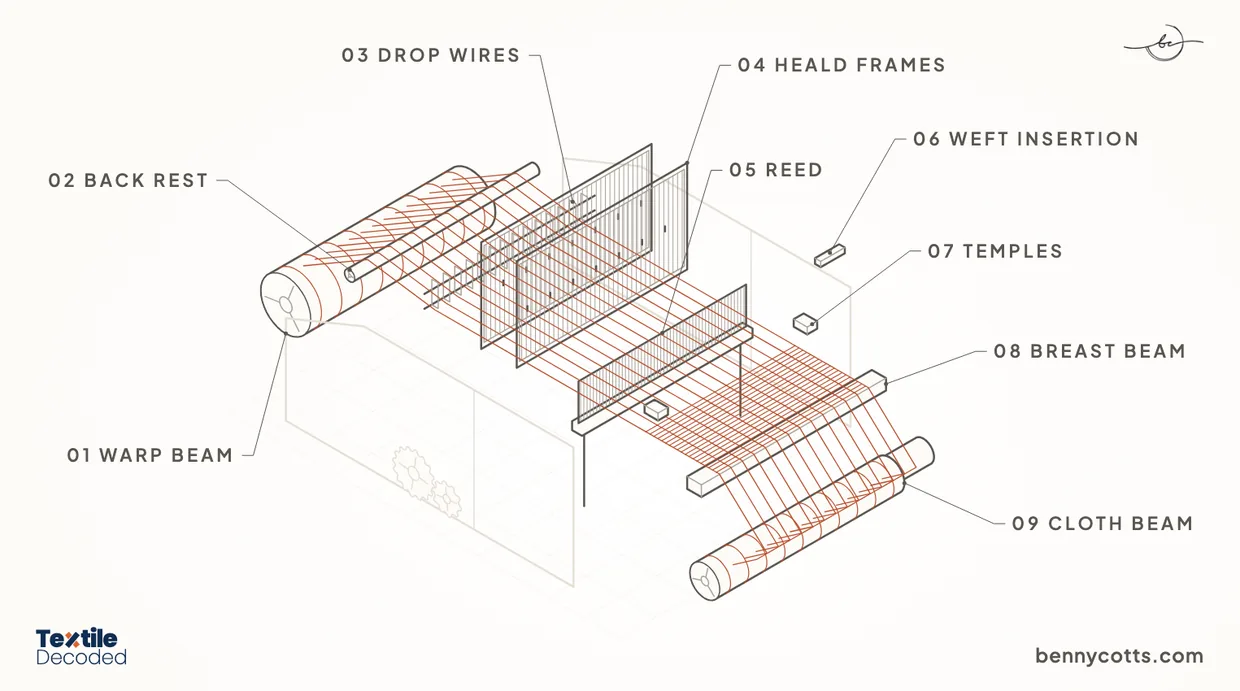
The difference is when dyeing happens compared to weaving. Yarn-dyed fabric starts with raw yarn that is dyed first and then woven on the loom. So the colour and any pattern are built into the cloth itself, before it even exists as fabric.
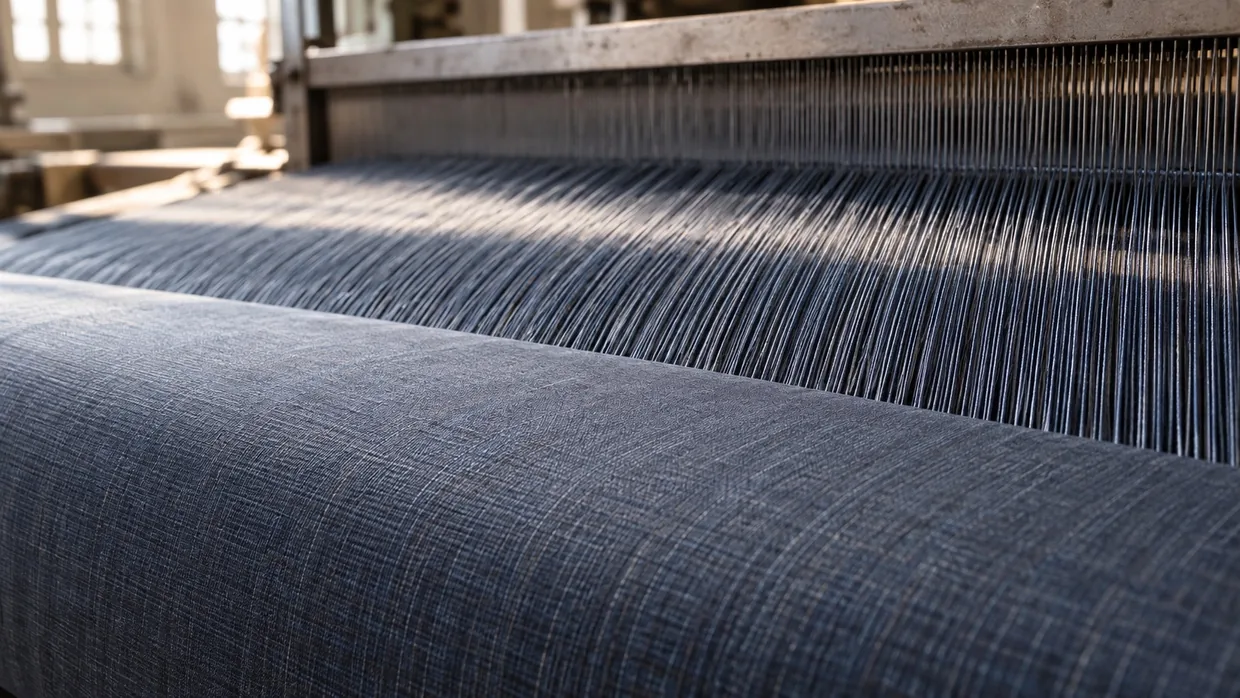
Piece-dyed fabric is woven first from undyed, grey yarn into plain grey cloth. Only then is it dyed as a finished piece, or 'in the piece', usually by rope or jig dyeing a full roll to one even shade. By the time colour is added, the weaving is already done.
Why every check and stripe is yarn-dyed
A woven pattern such as a check, stripe or dobby design needs two or more yarn colours, arranged in a set order across the warp and weft before weaving starts. You cannot piece-dye a pattern into a roll afterwards, because a dye bath colours the whole cloth evenly, not chosen threads.
This is why our checks and stripes are all yarn-dyed, including Cook & Safe Checks, Mini Check (Black & White), Designer Check, School Check and Fine Strip Dobby. The pattern is part of the cloth, not printed on it, so it runs right through. It cannot fade, bleed or wash off the way a surface print eventually does.
Why most solid uniform shades are piece-dyed
A plain, solid-coloured uniform fabric such as navy, khaki or grey does not need a woven-in pattern. So piece-dyeing is the simpler and faster route: weave the grey cloth in volume, then dye it to the shade an order needs. This also makes ready-stock shades practical, because a mill can hold grey cloth and dye smaller batches to order, instead of fixing the colour before weaving.
Most corporate, school and institutional programs specify a solid shade, which is why the bulk of uniform fabric in the market, ours included, is piece-dyed rather than yarn-dyed.
| Yarn-dyed | Piece-dyed | |
|---|---|---|
| Colour added | Before weaving, to the raw yarn | After weaving, to finished grey cloth |
| Can create a pattern | Yes, checks, stripes and dobby designs | No, one even shade across the roll |
| Typical use | Kitchen checks, school checks, statement stripes | Solid corporate, school and institutional shades |
| Reorder flexibility | Lower; a new pattern colourway needs new dyed yarn | Higher; grey stock can be dyed to shade on demand |
What this means when you are specifying fabric
- Want a pattern that will never wash out? Specify yarn-dyed, since that is the only route to a woven check or stripe.
- Want a solid shade with fast reorders? Specify piece-dyed, which is what most ready-stock programs already use.
- Comparing two check fabrics on price? Confirm both are genuinely yarn-dyed rather than one being a printed imitation, since a printed check is cheaper to make but wears very differently.
- Locking a shade for reorders matters either way; see our guide on dye-lot consistency for how we hold a shade to a standard across batches.
How Benny Cotts weaves and dyes both
We weave every fabric, plain and patterned, at our own unit in Village Atoon, Bhilwara, on 24 looms. Yarn dyeing, piece dyeing, finishing and lab testing all go through trusted processing partners in the region, and we are ISO 9001:2015 certified.
Whether you need a solid piece-dyed shade or a yarn-dyed check, swatches are available on request, and minimum order is 50 m per shade from ready stock and 500 m per shade for a custom shade or construction.
FAQ
Frequently asked questions
- Is yarn-dyed fabric more durable than piece-dyed?
- Not inherently. Durability comes mainly from weave, GSM and fiber blend. What yarn-dyeing adds is pattern permanence: a woven check or stripe cannot wash out the way a surface print can, but a piece-dyed solid shade of the same construction wears just as well.
- Can a solid colour be yarn-dyed?
- It can, but it is unusual. Dyeing yarn before weaving a single solid colour adds cost and lead time, and gives no visible benefit over piece-dyeing the same shade. Yarn-dyeing is used for solids mainly when a mill is already running dyed yarn for a nearby pattern batch.
- How can I tell if a check fabric is yarn-dyed or printed?
- Check the back of the cloth. On a genuine yarn-dyed check the pattern shows through clearly on both sides, since the colour runs through the yarn itself. A printed check is usually duller or barely visible on the reverse, because the colour sits on the surface only.
- Why does yarn-dyed fabric usually cost more than piece-dyed?
- Dyeing yarn before weaving is a slower, more labour-intensive stage, and a multi-colour warp has to be set up on the loom for the pattern. Piece-dyeing a plain grey roll after weaving is a faster, more standardised process, which keeps solid piece-dyed shades generally cheaper to produce.
- Does dye-lot variation affect yarn-dyed fabric too?
- Yes. Each batch of dyed yarn is its own lot, just as each piece-dye bath is, so a reordered check pattern can drift in shade between batches for the same reasons a solid colour can. Locking an approved standard matters for both.
- Which should I choose for a new uniform program?
- Start from the design, not the dyeing method. If the brief calls for a woven check or stripe, yarn-dyed is the only option. If it calls for a solid shade, piece-dyed is simpler, faster to reorder, and what most institutional programs already use.
- Is solid dyed the same as piece dyed?
- They overlap but they describe different things. Solid dyed describes the result: one flat shade across the whole fabric, with no check, stripe or melange effect. Piece dyed describes the process: the fabric is woven as greige (undyed cloth straight off the loom) and then dyed as a finished piece. Most solid uniform fabric is piece dyed, which is why the two terms are used as if they mean the same. They do not, because a solid shade can also be made yarn-dyed, by dyeing the yarn one colour before weaving. If a specification says solid, ask which route it means, since the two behave differently on reorders and on shade matching.
- What is the difference between piece dyed and garment dyed?
- The difference is the stage at which colour goes in. Piece dyeing colours the woven fabric before it is cut and stitched, so the whole piece carries one shade and the garment is assembled from already-dyed cloth. Garment dyeing colours the finished garment after stitching. For an institutional uniform program, piece dyeing is the normal route: shade is fixed and inspectable before any cutting happens, and a reorder is matched against a fabric standard. With garment dyeing, both shade control and shrinkage risk move to after stitching, when there is far less room to correct either.
- Is yarn-dyed fabric used for a particular season?
- No. Dyeing method and seasonality are unrelated. What makes a fabric suit summer or winter is its weight, weave and finish, not whether the colour went into the yarn or into the woven piece. Yarn-dyed fabric exists across the whole weight range, from light checked shirting to heavy blazer cloth. If you are choosing for a climate, specify the GSM band and construction, and treat the dyeing method as a separate decision driven by whether the design needs a woven check or stripe.
Cite this guide
Quoting this page? Paste the line below so the credit links back.
<a href="https://www.bennycotts.com/guides/yarn-dyed-vs-piece-dyed">Yarn-Dyed vs Piece-Dyed Fabric, Explained</a>, Benny Cotts, 2026Next in Weaving
Woven Fabric Defects: Where Each One Comes From
More in Weaving
- How a Loom Works: Parts and Motions of Weaving
- Loom Types: Shuttle, Rapier, Air-Jet, Projectile and Water-Jet
- Twill vs Plain Weave for Uniforms
- Dobby Weave Structure and Chambray, Explained
- Yarn-Dyed vs Piece-Dyed Fabric, Explained
- Woven Fabric Defects: Where Each One Comes From
- Woven vs Knitted Fabric: What's the Difference?
Updated 26 July 2026 · Benny Cotts, Bhilwara
Fabrics
Fabrics mentioned in this guide
Spec, price and MOQ on every fabric page.

School Check Twill
Poly-Viscose 70/30 · 225 GSM
Twill-woven poly-viscose check built for school uniforms.

Mini Check (Black & White)
100% Polyester · 161 GSM
Classic black-and-white mini check in a crisp polyester.

Cook & Safe Checks
100% Polyester · 185 GSM
Checked polyester built for kitchen and food-service workwear.

Fine Strip Dobby
Poly-Viscose blend · 205-225 GSM
Subtle dobby texture for executive uniforms.

Sonata
Poly-Viscose blend · 190-210 GSM
Cost-efficient uniform fabric without compromising weave quality.

Power Gold
Premium Poly-Viscose blend · 230-250 GSM
Our premium-line suiting with a refined hand and superior drape.
Industries this applies to
Uniform programs these fabrics are used for
- Fabric for Business Attire
- Fabric for Corporate Uniforms
- Fabric for Corporate Shirts
- Fabric for Blazers & Waistcoats
- Fabric for School Uniforms
- Fabric for College & University Uniforms
- Fabric for Sports & PT Uniforms
- Fabric for Pre-School & Kindergarten Uniforms
- Fabric for Doctor Coats
- Fabric for Nurse Scrubs
- Fabric for Lab Coats
- Fabric for OT & Surgical Wear
- Fabric for Patient Gowns
- Fabric for Hospital Staff Uniforms
- Fabric for Hotel Uniforms
- Fabric for Chef Coats
- Fabric for Salon & Spa Uniforms
- Fabric for Cabin Crew Uniforms
- Fabric for Housekeeping Uniforms
- Fabric for Business Suits
- Fabric for Black-Tie Attire
- Fabric for Formal Event Wear
Fabric types covered here
Keep reading
Related guides




Ready to place an enquiry?