Textile Decoded
Sizing: Why Warp Yarn Gets Starched
Why warp yarn is coated before weaving, what size is made of, how a sizing machine works, what goes wrong with too little or too much size, and where it is washed out.
Jump to section
Quick answer
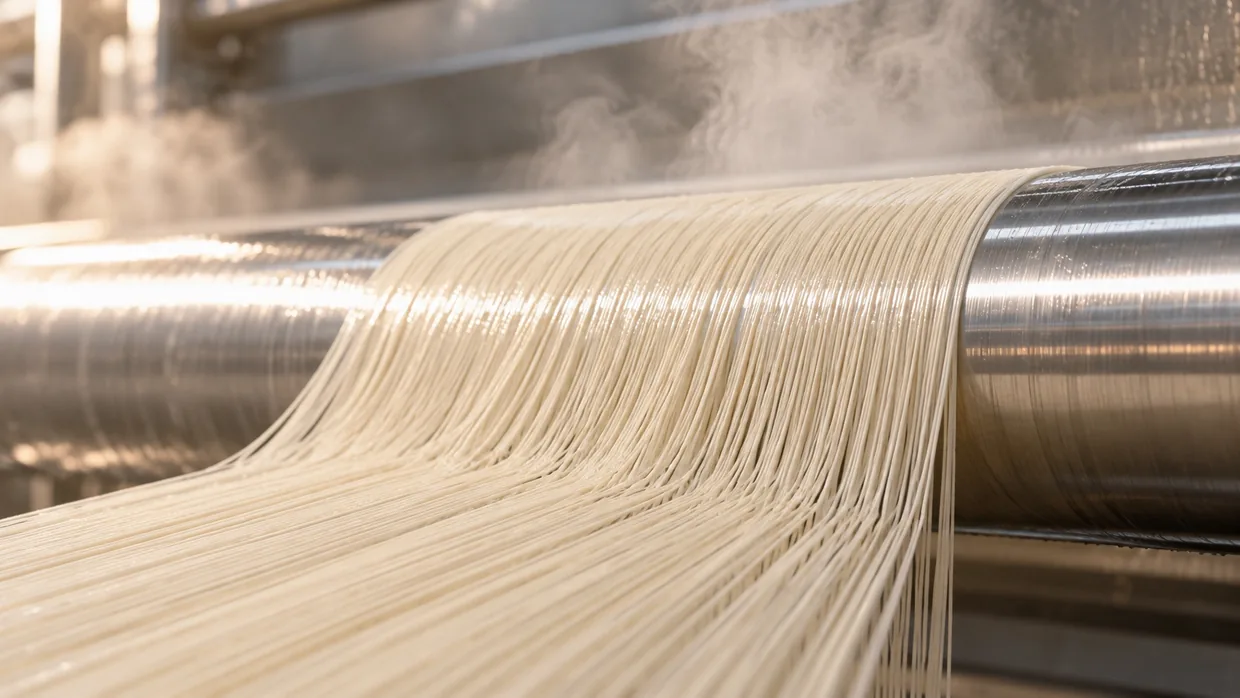
Sizing coats each warp thread with a thin protective film, called size, before weaving. On the loom the warp is held tight and rubbed by metal parts thousands of times, and without protection its loose surface fibers fray and the ends break. Size is usually starch for cotton, and synthetic products such as PVA or acrylic for polyester blends. It glues those fibers down and makes the yarn smoother and stronger for the run. A sizing machine dips the warp sheet in a size bath, squeezes off the excess, dries it on heated cylinders and winds it onto the weaver's beam. After weaving, the size is washed out again at the process house.
What the warp goes through on a loom
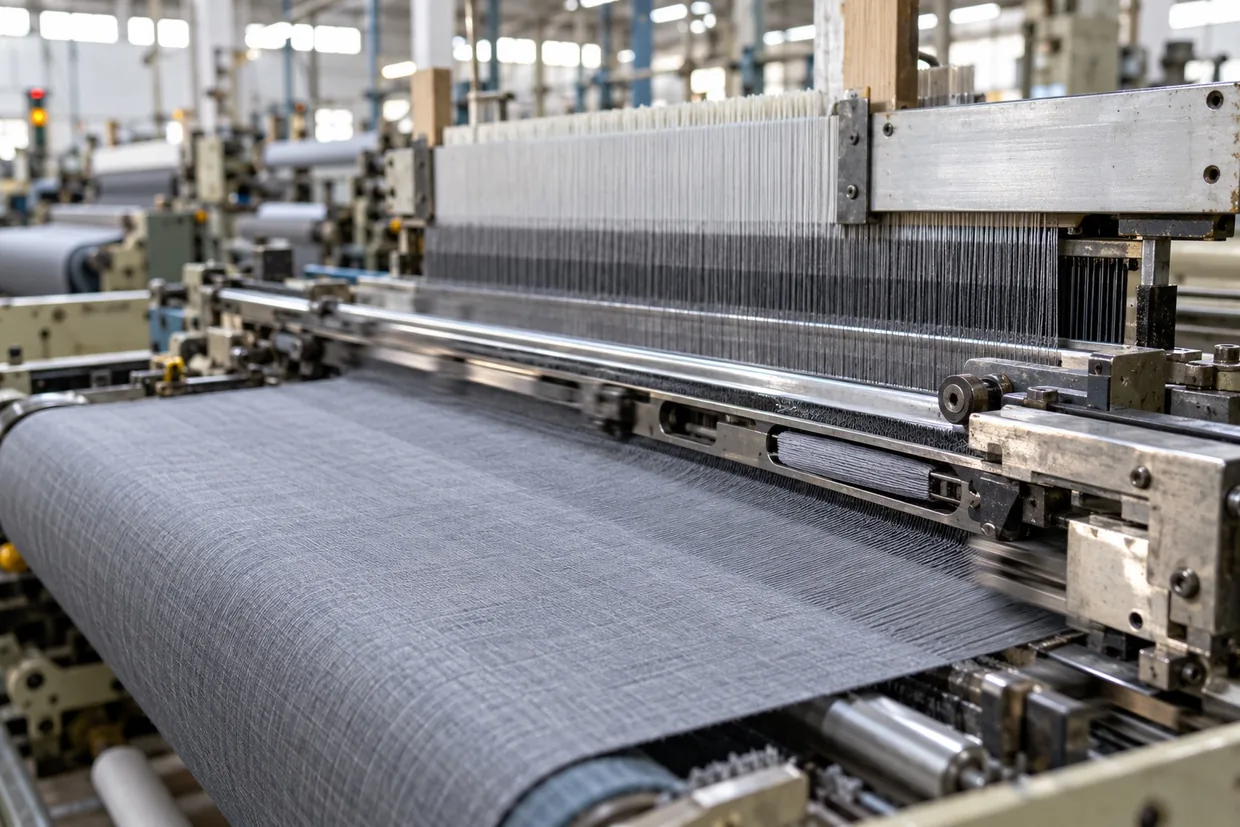
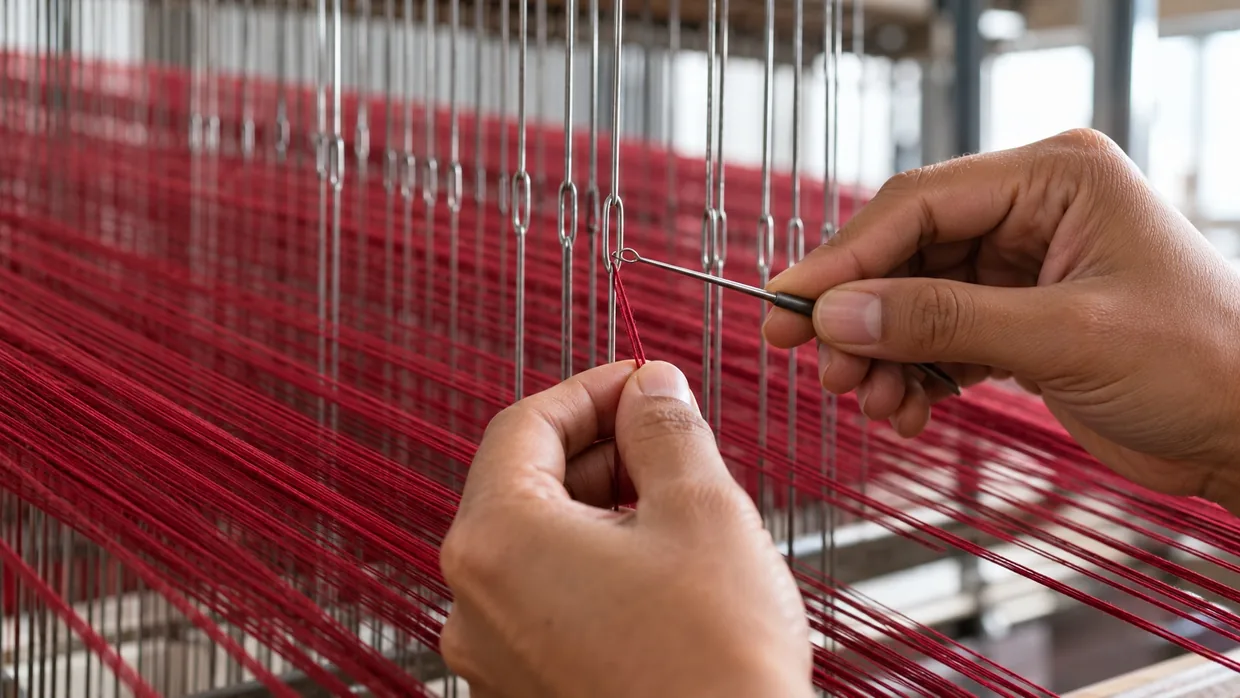
In the last lesson the warp was wound onto beams. Before those beams go to the loom, the warp needs protection, because weaving is hard on it. The warp is held under tension for the whole run. On every cycle each end is pulled up or down, and it rubs against the drop wire, the heald eye and the reed, which are the loom parts it is threaded through. A loom makes several hundred cycles a minute. So each stretch of warp is rubbed many thousands of times before it becomes cloth.
Spun yarn has tiny fiber ends sticking out of its surface, a little like a fuzzy wool thread. Under all that rubbing, those fibers catch, fray and tangle with the neighbouring ends, and the yarn weakens and breaks. Every break stops the loom and can leave a fault in the fabric.
What size is
Size is a coating put on the warp to protect it during weaving, rather like hair gel smoothing down loose strands. It does two jobs. It glues the loose surface fibers flat, so the yarn is smoother. It also soaks a little into the yarn to bind the fibers together, so the yarn is stronger.
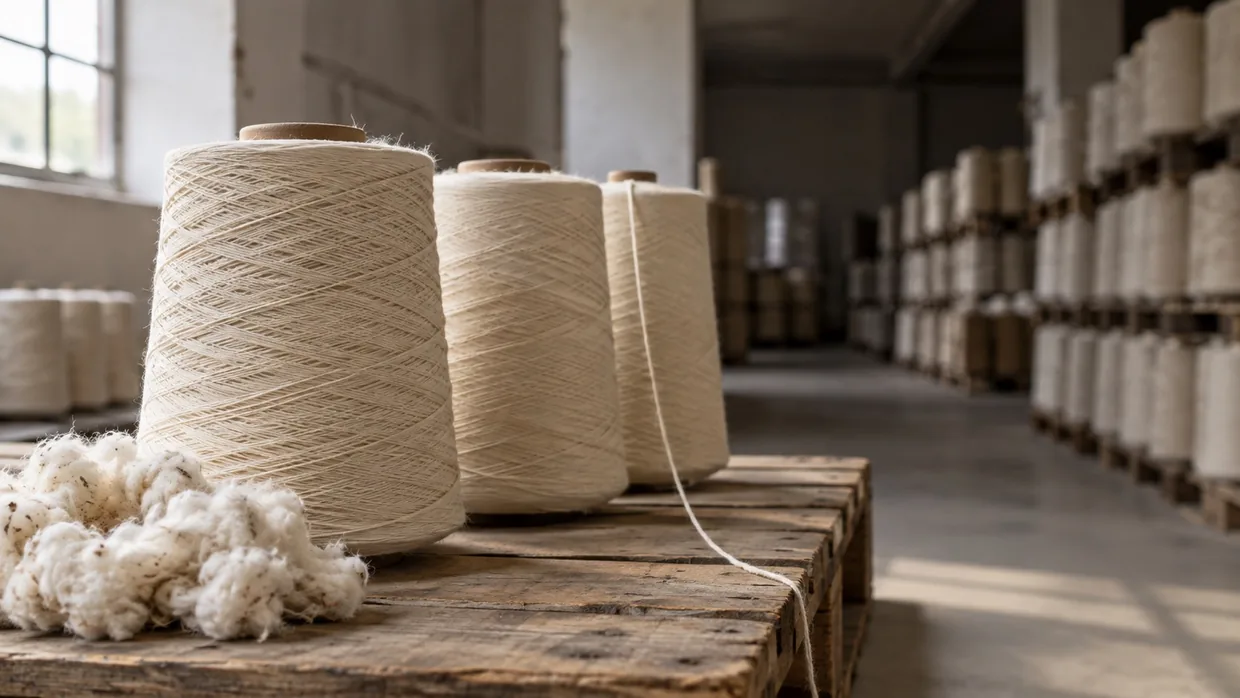
What the size is made of depends on the fiber. Generally, cotton warps are sized mainly with starch, which sticks well to cotton. Polyester blends usually need synthetic sizes such as PVA (polyvinyl alcohol) or acrylic-based products, because starch alone does not grip smooth synthetic fiber well. Mills often mix ingredients and add small amounts of softeners or wax to keep the film flexible. Exact recipes vary from mill to mill and yarn to yarn.
At Benny Cotts, sizing is part of weaving preparation at our weaving unit in Village Atoon, Bhilwara.
How a sizing machine works
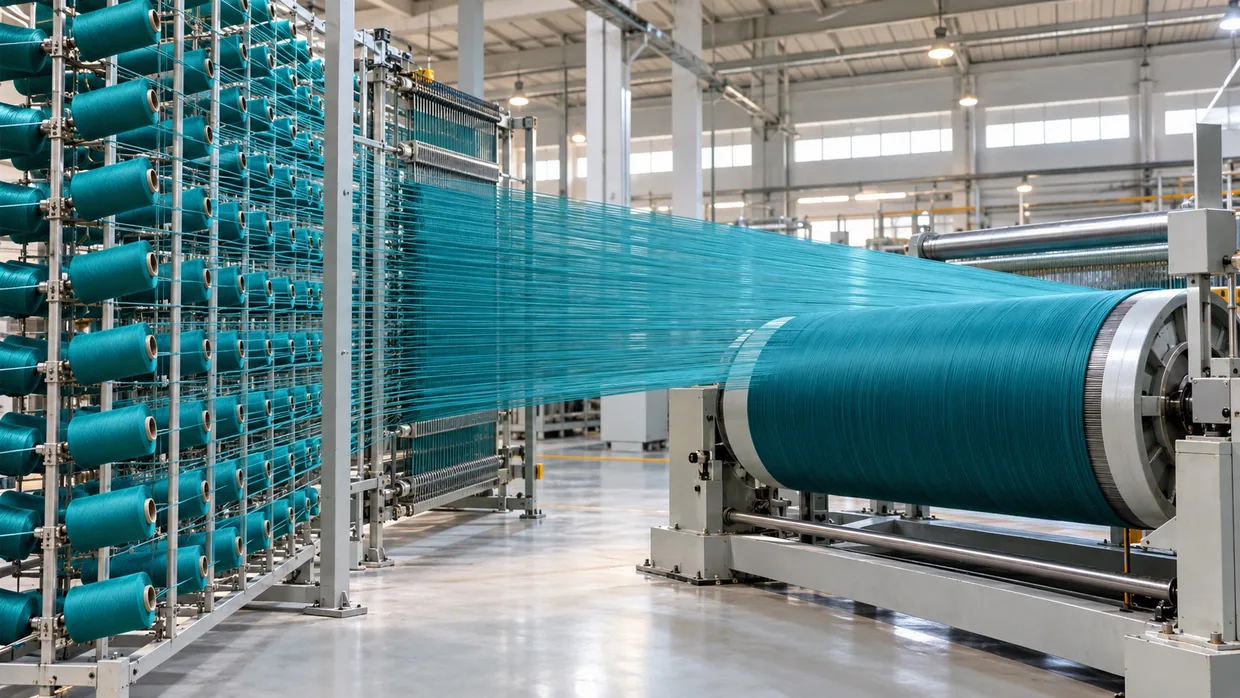
A sizing machine takes the warp from several beams made at warping, combines them into one sheet, coats it, dries it and winds it onto the final weaver's beam. Read from start to finish:
- Creel of warper's beams: the beams from direct warping are unwound together so their ends join into one full-width sheet.
- Size box: a heated trough of liquid size that the sheet dips through.
- Squeeze rollers: a pair of heavy rollers that press out the extra size, so each end carries just the right amount.
- Drying cylinders: large steam-heated drums that dry the coating before the ends can stick together.
- Splitting and winding: the dried ends are separated from each other with rods and wound side by side onto the weaver's beam.
The beam that comes off the sizing machine is the one that will go on the loom, after the threading step in the next lesson.
How much size: the pickup
The amount of size the yarn carries is called the size pickup, usually given as a percentage of the yarn's weight. It is set by the strength of the size mix and by how hard the squeeze rollers press. Finer and weaker yarns and closely set warps generally need more protection; stronger, smoother yarns need less.
Mills tune the pickup for each warp rather than using one number for everything, and they check it as the warp runs.
Why ply yarn often needs less size
Ply yarn is two (or more) single yarns twisted together. The twisting traps many of the loose surface fibers inside and makes the yarn stronger and smoother to begin with. Because of that, ply warps often need only light sizing, and some are woven with very little.
This is one reason ply yarn such as 2/40s is common in suiting warps. Our yarn counts and blends guide explains how to read those numbers, and the glossary entry on ply gives the short version.
Too little or too much size
The amount of size must be right: neither too little nor too much.
| Problem | What happens |
|---|---|
| Too little size | The yarn stays hairy and weak. Ends fray and break more on the loom, adjacent ends cling together, and faults rise. |
| Too much size | The yarn turns stiff and brittle. It can crack and shed size dust on the loom, ends may still break, and more size has to be washed out later. |
| Uneven size | Some parts of the warp are protected and others are not, which can lead to streaks and uneven behaviour in weaving and dyeing. |
Desizing: washing it out later
Size is only needed during weaving. In finished cloth it would make the fabric stiff and would stop dyes and finishes soaking in evenly. So the first step at the process house is desizing, which removes the size, usually with enzymes or washing chemicals suited to the type of size used. See the glossary for desizing.
For our fabrics, desizing, dyeing and finishing are done by partnered process houses in Bhilwara, after the greige (unfinished) fabric leaves our looms. Poor desizing is a common cause of patchy dyeing, which our dye lot consistency guide touches on.
What this means for a fabric buyer
You will never see size on finished fabric, but sizing affects it. Good sizing means fewer broken ends and fewer weaving faults, and well-matched size that washes out cleanly helps the cloth dye evenly. When a weaving fault such as a run of broken ends shows up, sizing is one of the first places a mill looks.
Next lesson: Drawing-in: getting the beam ready for the loom, where every end is threaded through the loom parts. Browse the full course on the Textile Decoded hub.
FAQ
Frequently asked questions
- Why is warp yarn sized but not weft?
- The warp is held under tension and rubbed by the loom parts on every cycle for the whole run, so it needs a protective coating. The weft is laid in once, with little strain, so it is normally not sized.
- What is size made of?
- Generally starch for cotton warps and synthetic products such as PVA or acrylic for polyester blends, often mixed with small amounts of softeners or wax. Recipes vary by mill and yarn.
- What happens if a warp has too much size?
- It becomes stiff and brittle, can crack and shed size dust on the loom, and leaves more size to be washed out at the process house.
- Does sizing stay in the finished fabric?
- No. It is removed by desizing, the first step at the process house, so the fabric can take dye and finishes evenly.
- Where does Benny Cotts size its warps?
- Sizing is part of weaving preparation at our weaving unit in Village Atoon, Bhilwara. Desizing, dyeing and finishing are done by partnered Bhilwara process houses. You can Request Catalog at /quote to see the fabrics we weave.
Cite this guide
Quoting this page? Paste the line below so the credit links back.
<a href="https://www.bennycotts.com/guides/sizing-why-warp-yarn-gets-starched">Sizing: Why Warp Yarn Gets Starched</a>, Benny Cotts, 2026Next in Preparing to weave
Drawing-In: Getting the Beam Ready for the Loom
More in Preparing to weave
- Warping: Building the Warp Beam
- Sizing: Why Warp Yarn Gets Starched
- Drawing-In: Getting the Beam Ready for the Loom
Updated 17 October 2026 · Benny Cotts, Bhilwara
Fabrics
Fabrics mentioned in this guide
Spec, price and MOQ on every fabric page.

Nano
Poly-Viscose blend · 180-200 GSM
Our entry-level uniform fabric for large-volume programs.

Sonata
Poly-Viscose blend · 190-210 GSM
Cost-efficient uniform fabric without compromising weave quality.

Grado 1st
Poly-Viscose blend · 220-240 GSM
Tailoring-grade fabric built for everyday durability.
Industries this applies to
Uniform programs these fabrics are used for
- Fabric for Business Attire
- Fabric for Corporate Uniforms
- Fabric for Corporate Shirts
- Fabric for Corporate Trousers
- Fabric for Blazers & Waistcoats
- Fabric for School Uniforms
- Fabric for College & University Uniforms
- Fabric for Sports & PT Uniforms
- Fabric for Pre-School & Kindergarten Uniforms
- Fabric for Doctor Coats
- Fabric for Nurse Scrubs
- Fabric for Lab Coats
- Fabric for OT & Surgical Wear
- Fabric for Patient Gowns
- Fabric for Hospital Staff Uniforms
- Fabric for Chef Coats
- Fabric for Salon & Spa Uniforms
- Fabric for Cabin Crew Uniforms
- Fabric for Ground Staff Uniforms
- Fabric for Army Uniforms
- Fabric for Police Uniforms
- Fabric for Security Guard Uniforms
- Fabric for Industrial Uniforms
- Fabric for Construction Workwear
- Fabric for Housekeeping Uniforms
- Fabric for Business Suits
- Fabric for Black-Tie Attire
- Fabric for Formal Event Wear
Fabric types covered here
Keep reading
Related guides
Ready to place an enquiry?