
Fabric distributor
The Cloth Was Sold On, and the Complaint Came Back
A fabric stockist buying running qualities in multi-roll lots could not tie a customer complaint, or a test report request, back to the lot the cloth came from. Fixing it was a record-keeping change at receipt, not a supplier change.
Scale
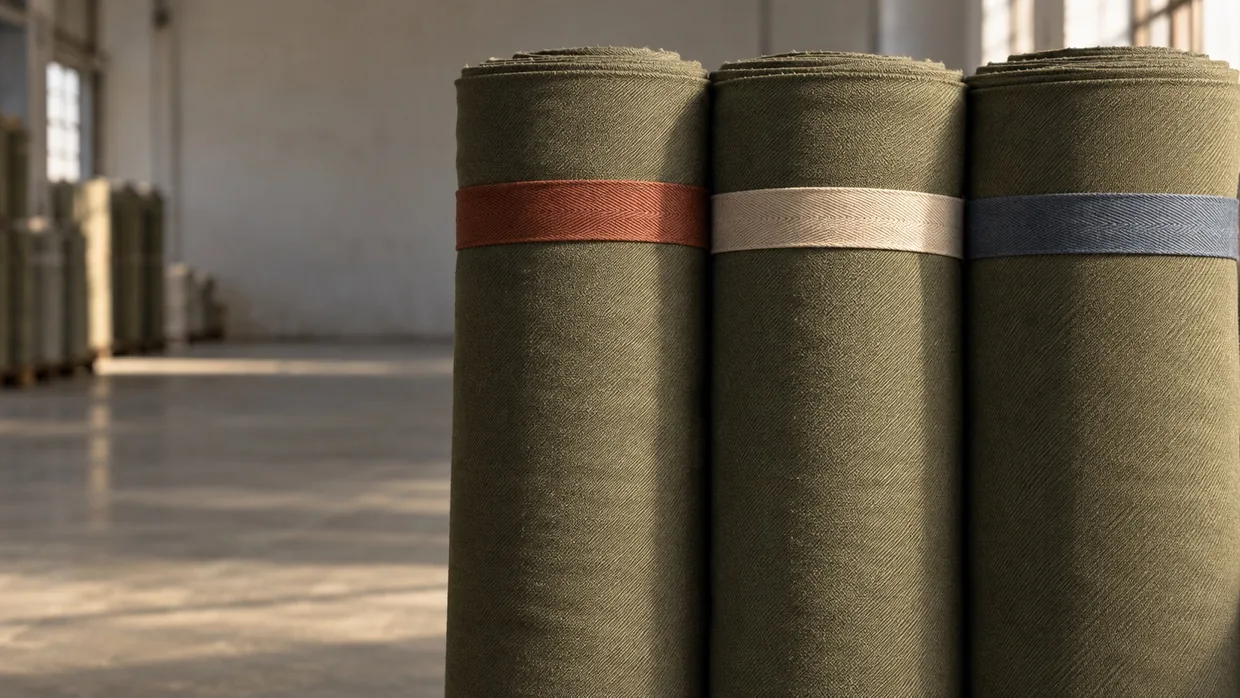
Multi-roll lots broken into short lengths for many small buyers
The challenge
The stockist buys running qualities in multi-roll lots and breaks them into short lengths for tailoring shops, small uniform contractors and institutional buyers placing orders far below any mill minimum. That is a useful business and the cloth performs. The problem arrives weeks later, in two forms. One customer says the length they bought does not match the one they bought before. Another has been asked to produce a composition or a strength report against a tender clause and wants it for cloth already cut and stitched. In both cases the stockist goes to the shelf and finds he cannot say which lot the sold length came from, because the rolls arrived with lot and roll numbers, were shelved together under one shade name, and were invoiced out by quality name and metreage. Nothing in that chain is careless. The identity was simply never carried onto the sale line, and once it is gone neither the stockist nor the mill can act: a mill can re-check a named lot against its retained reference and its processing record, and can do nothing at all with an unidentified length.
Our approach
- The first change was at receipt rather than at sale. Lot and roll numbers now come off the incoming documents and onto the stockist's own stock record, and the sale line carries the lot forward, so an invoice says which lot the length was cut from and not only which quality. This is a one-line change to a document he was already raising, and it is the change that makes every other step below possible.
- The second was a retain per lot, not per shade name. A small cut is taken from each incoming lot, labelled with the lot and the date, and filed. When a customer says the cloth does not match, the comparison is now between the sold length and the retain from its own lot, which either shows drift or shows that two different lots were fairly sold as the same shade. Both answers are useful and neither was available before.
- The third was physical: lots are kept separated on the shelf rather than merged once they read as the same shade. Merging is what destroys identity in practice, and it usually happens for a good reason, which is space. Where separation was not possible the stockist chose to write the lot on the roll itself rather than rely on the shelf position.
- The fourth was a rule for filling an order. One customer requirement is filled from one lot wherever the length allows it, and where it cannot be, the customer is told at the point of sale rather than after the garments are cut. A tailoring shop that knows it has two lots will lay them so the join falls between garments. One that finds out later has already cut across it.
- The fifth was moving the test documents to the buying stage. A report is drawn against a lot, so it cannot be reconstructed after the cloth has left the shelf. Where the stockist supplies buyers who face tender clauses, he now orders the report with the lot, and prices it in, instead of treating it as a favour to be asked for later. This is also the point at which the mill can help and the only point at which it can.
- The last was knowing the boundary. For a named lot, a mill can compare against its own retained reference and check its processing record for that lot. For an unidentified length, it can offer an opinion on the cloth in front of it and nothing more. Saying that boundary out loud to a customer at the counter turned out to be more useful than any of the paperwork, because it explains why the lot number on the invoice matters to them and not only to the stockist.
Outcome
Complaints are now answered from a retain against a named lot instead of from memory, buyers facing tender documentation get reports ordered with the cloth rather than requested after it is cut, and a customer who has to be supplied from two lots is told before the cloth is laid rather than after. The stockist also has a reason to buy documented lots, because the documentation is what he is now able to sell on.
Cite this case study
Quoting this page? Paste the line below so the credit links back.
<a href="https://www.bennycotts.com/case-studies/stockist-lot-identity-across-resale">The Cloth Was Sold On, and the Complaint Came Back</a>, Benny Cotts, 2026Updated 8 September 2026 · Benny Cotts, Bhilwara
Fabrics
Fabrics used in this case
Spec, price and MOQ on every fabric page.

Officer Choice
Poly-Viscose (PV) blend · 210-230 GSM
Crisp, structured suiting engineered for officer uniforms.

Commander PV Ultima Shirting
Poly-Viscose (PV Ultima), 2/40 x 2/40 premium, 2/40 x 1/20 standard
PV Ultima spun shirting in 135 shades, 36" and 58", grey ready year-round.

Sonata
Poly-Viscose blend · 190-210 GSM
Cost-efficient uniform fabric without compromising weave quality.

Nano
Poly-Viscose blend · 180-200 GSM
Our entry-level uniform fabric for large-volume programs.
Industries this applies to
Uniform programs these fabrics are used for
- Fabric for Corporate Shirts
- Fabric for Corporate Trousers
- Fabric for School Uniforms
- Fabric for Sports & PT Uniforms
- Fabric for Pre-School & Kindergarten Uniforms
- Fabric for Doctor Coats
- Fabric for Nurse Scrubs
- Fabric for Lab Coats
- Fabric for OT & Surgical Wear
- Fabric for Patient Gowns
- Fabric for Hospital Staff Uniforms
- Fabric for Chef Coats
- Fabric for Salon & Spa Uniforms
- Fabric for Ground Staff Uniforms
- Fabric for Army Uniforms
- Fabric for Police Uniforms
- Fabric for Security Guard Uniforms
- Fabric for Industrial Uniforms
- Fabric for Construction Workwear
- Fabric for Housekeeping Uniforms
Ready to place an enquiry?