
Textile Decoded
Dyeing: Which Dye for Which Fiber
Why polyester needs disperse dyes at high temperature, why cotton and viscose take reactive or vat dyes, how blends get two dye classes, and which machines do the work.
Jump to section
Quick answer
Each fiber takes only certain dyes. Polyester is dyed with disperse dyes, which only get inside the fiber at high temperature, around 130 degrees Celsius under pressure. Cotton and viscose are dyed with reactive dyes, which form a chemical bond with the fiber, or vat dyes. Vat dyes are locked inside the fiber as an insoluble pigment and hold up very well against washing and light. A poly-viscose or poly-cotton blend therefore needs two dye classes, one for each fiber, applied in two separate baths or together in one. The machine, jet, jigger, beam or continuous pad, is chosen by fabric type and order length. Getting the dye class and process right is what decides colour fastness.
One cloth, two kinds of fiber
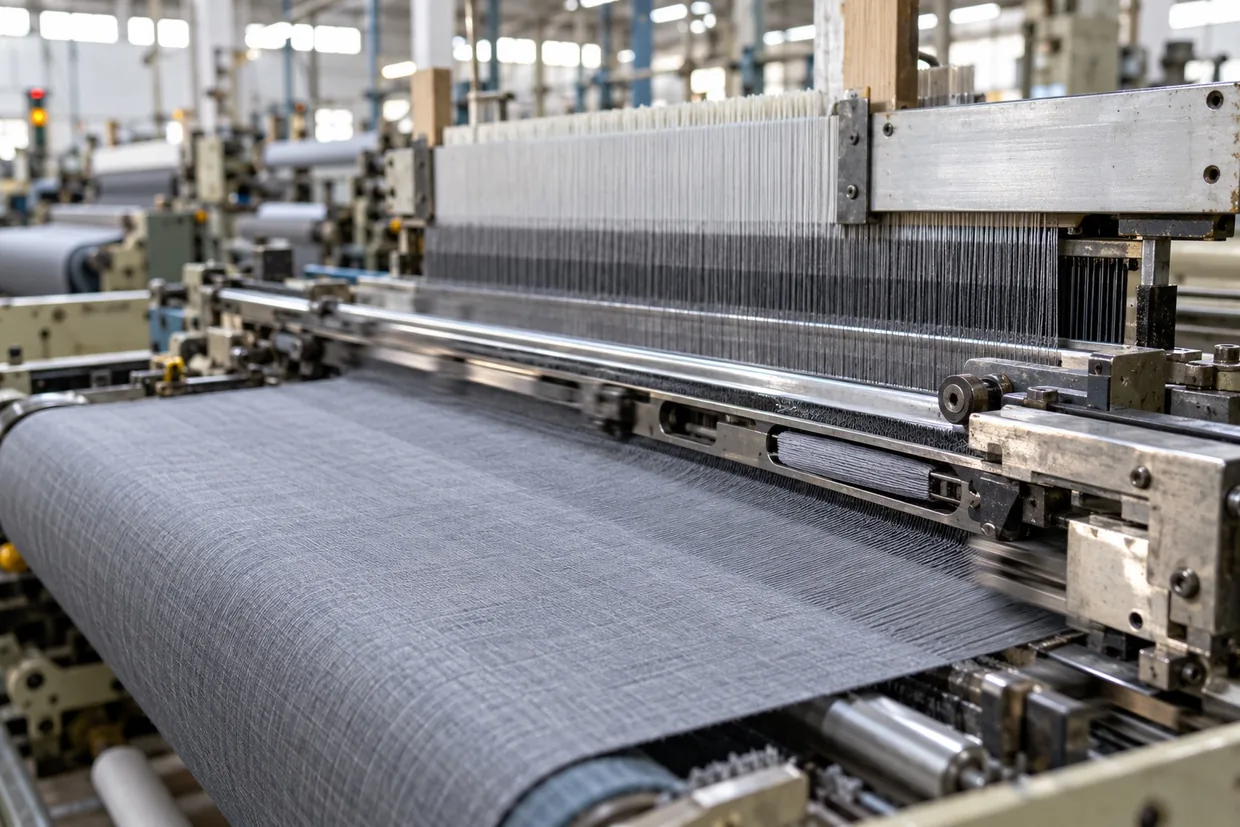
After weaving, the fabric comes off the loom as greige: undyed, unfinished cloth. At Benny Cotts the weaving happens in-house at Village Atoon, Bhilwara, and the greige then goes to our partnered Bhilwara process houses for dyeing and finishing.
The first question a dyer asks is not the colour. It is the fiber. A dye that colours cotton beautifully will simply wash off polyester, and the reverse is also true. Each fiber has its own chemistry, so each needs its own family of dyes, called a dye class.
Polyester: disperse dyes and high heat
Polyester is a plastic fiber, and it is water-repellent and tightly packed inside. Water-soluble dyes cannot get in. Instead it is dyed with disperse dyes. These are very fine particles spread (dispersed) in water, and they dissolve into the fiber once it is hot enough.
At normal boiling point the polyester structure stays too tight. So it is usually dyed at around 130 degrees Celsius in sealed, pressurised machines, called high-temperature or HT dyeing. The heat loosens the fiber, the dye moves in, and when it cools the dye is trapped inside. Our polyester lesson explains where the fiber comes from.
After dyeing, loose dye sitting on the surface is washed off with a chemical clean-up step called reduction clearing. Skip it, and the colour can rub off onto other clothes.
Cotton and viscose: reactive and vat dyes
Cotton and viscose are both cellulose, the same plant material, so they take the same dye classes. See the cotton and viscose lessons for how each fiber is made.
- Reactive dyes: dissolve in water and, with salt and alkali (a chemical like soda ash), form a true chemical bond with the fiber. They give bright, clear shades with good washing fastness, and are the most common choice for cotton and viscose.
- Vat dyes: they do not dissolve in water in their normal form. They are chemically changed into a soluble form so they can soak into the fiber, then turned back into the insoluble form inside it. They hold up very well against washing, light and bleach, which is why they are preferred for hard-wearing workwear and uniforms that are washed hard.
Reactive dyes do nothing to polyester, and disperse dyes barely stain cotton or viscose. That is the root of the blend problem.
Blends need two dye classes
A poly-viscose or poly-cotton fabric holds two fibers side by side in every yarn. To get one solid shade, each fiber must be dyed with its own class: disperse for the polyester part, reactive or vat for the cotton or viscose part. Our blends compared and poly-viscose ratios guides cover how the mix changes the fabric.
There are two common ways to do it:
- Two-bath: the polyester is dyed first with disperse dye at high temperature, cleared, and then the cellulose part is dyed with reactive dye in a second bath. Slower and uses more water and energy, but easier to control.
- One-bath: both dye classes go in together, with conditions chosen so each works on its own fiber. It saves time, water and energy, but needs dyes that do not upset each other and careful control.
If the two parts are not matched carefully, the fabric can look two-toned, with one fiber slightly lighter or a different tint. Matching both parts to one approved shade is what lab dips are for.
The machines: jet, jigger, beam and continuous
Fabric dyed after weaving is called piece-dyed, as our yarn-dyed vs piece-dyed guide explains. Piece dyeing uses a few main machine types:
- Jet: the fabric is joined into a loop and moved in rope form by a strong jet of dye liquor (the dye solution). Sealed jets can run at high temperature, so they suit polyester and blends, and they give a soft feel.
- Jigger: the fabric runs at full width from one roller to another, back and forth through a shallow trough of dye. Simple and gentle on the fabric, common for cotton and viscose.
- Beam: the fabric is wound at full width onto a perforated roller, and dye liquor is pumped through it. Good for fabrics that crease easily in rope form, and can run at high temperature for polyester.
- Continuous pad: the fabric runs through a trough and between squeeze rollers (padding), then through heat or steam to fix the dye, without stopping. Efficient for long runs of one shade.
Jet, jigger and beam are batch machines, so each load is one dye lot. Our dye lot consistency guide explains why lots can differ slightly.
What it means for fastness
Colour fastness is how well a colour stays put through washing, rubbing, sweat, light and ironing. It depends heavily on choosing the right dye class and running the process properly.
- Wrong or weak dye class on one fiber of a blend: the colour fades unevenly or bleeds in the wash.
- Poor reduction clearing on polyester: colour rubs off onto skin or other fabrics.
- Disperse dye under heat: some disperse dyes can move out of the fiber when the fabric is ironed or heat-set at high temperature, so dyers pick ones that hold up to heat.
- Reactive or vat dye not fully fixed or washed: loose dye bleeds into the first few washes.
Our uniform fabric care guide covers how washing habits affect colour over a garment's life.
What this means for a fabric buyer
You do not need to pick the dye yourself. What helps is telling your supplier how the garment will be used and washed: industrial laundry, bleach, strong sunlight, or home washing. That steers the process house towards the right dye class and the fastness levels you need.
For uniforms bought over many months, ask for an approved shade standard and order a program in as few lots as practical.
Browse the full course on the Textile Decoded hub.
FAQ
Frequently asked questions
- Why can't polyester be dyed like cotton?
- Polyester is water-repellent and tightly packed, so water-soluble dyes used on cotton cannot enter it. It needs disperse dyes, usually applied at around 130 degrees Celsius under pressure.
- What is the difference between reactive and vat dyes?
- Reactive dyes form a chemical bond with cotton or viscose and give bright shades with good wash fastness. Vat dyes are trapped inside the fiber as an insoluble pigment and hold up very well against washing, light and bleach, so they are often used for hard-wearing workwear.
- Why does a poly-viscose fabric need two dyes?
- Each fiber only takes its own dye class. The polyester takes disperse dye and the viscose takes reactive dye, so both are applied, either in two separate baths or together in one, to get one solid shade.
- Does Benny Cotts dye fabric in-house?
- No. We weave in-house at our unit in Village Atoon, Bhilwara. Dyeing, finishing and testing are done by our partnered Bhilwara process houses to the approved shade. You can Request Catalog at /quote to see our fabrics.
Cite this guide
Quoting this page? Paste the line below so the credit links back.
<a href="https://www.bennycotts.com/guides/dyeing-which-dye-for-which-fiber">Dyeing: Which Dye for Which Fiber</a>, Benny Cotts, 2026Next in Processing
Lab Dips and Shade Approval, Explained
More in Processing
- What a Process House Does: Greige to Finished Fabric
- Dyeing: Which Dye for Which Fiber
- Lab Dips and Shade Approval, Explained
- Why Reorders Do Not Match: Dye-Lot Consistency
- Fabric Swatches vs Shade Cards Explained
- Fire-Retardant, Anti-Microbial and Moisture-Control Finishes Explained
- Water-Repellent, Oil-Repellent and Anti-Static Finishes Explained
- Easy-Care and Wrinkle Recovery in Shirting, Explained
- Why Uniforms Shrink, and How to Prevent It
- Does Viscose Pill? Uniform Fabric Pilling and How to Spec It
- Why Uniforms Fade: Colour Fastness and Hot Washing
- Why White Shirts Go Yellow or Grey, and How to Spec Against It
- What Moves Processing Costs: Dyes, Energy, Water, Shade and Lot Size
Updated 18 October 2026 · Benny Cotts, Bhilwara
Fabrics
Fabrics mentioned in this guide
Spec, price and MOQ on every fabric page.

Nano
Poly-Viscose blend · 180-200 GSM
Our entry-level uniform fabric for large-volume programs.

Sonata
Poly-Viscose blend · 190-210 GSM
Cost-efficient uniform fabric without compromising weave quality.

Grado 1st
Poly-Viscose blend · 220-240 GSM
Tailoring-grade fabric built for everyday durability.
Industries this applies to
Uniform programs these fabrics are used for
- Fabric for Business Attire
- Fabric for Corporate Uniforms
- Fabric for Corporate Shirts
- Fabric for Corporate Trousers
- Fabric for Blazers & Waistcoats
- Fabric for School Uniforms
- Fabric for College & University Uniforms
- Fabric for Sports & PT Uniforms
- Fabric for Pre-School & Kindergarten Uniforms
- Fabric for Doctor Coats
- Fabric for Nurse Scrubs
- Fabric for Lab Coats
- Fabric for OT & Surgical Wear
- Fabric for Patient Gowns
- Fabric for Hospital Staff Uniforms
- Fabric for Chef Coats
- Fabric for Salon & Spa Uniforms
- Fabric for Cabin Crew Uniforms
- Fabric for Ground Staff Uniforms
- Fabric for Army Uniforms
- Fabric for Police Uniforms
- Fabric for Security Guard Uniforms
- Fabric for Industrial Uniforms
- Fabric for Construction Workwear
- Fabric for Housekeeping Uniforms
- Fabric for Business Suits
- Fabric for Black-Tie Attire
- Fabric for Formal Event Wear
Fabric types covered here
Keep reading
Related guides

Ready to place an enquiry?