Topic
Weaving
Inside the loom, and how the same machine makes plain, twill and dobby cloth.
7 articles · 1 video
Featured video
How a Loom Works: Parts and Motions of Weaving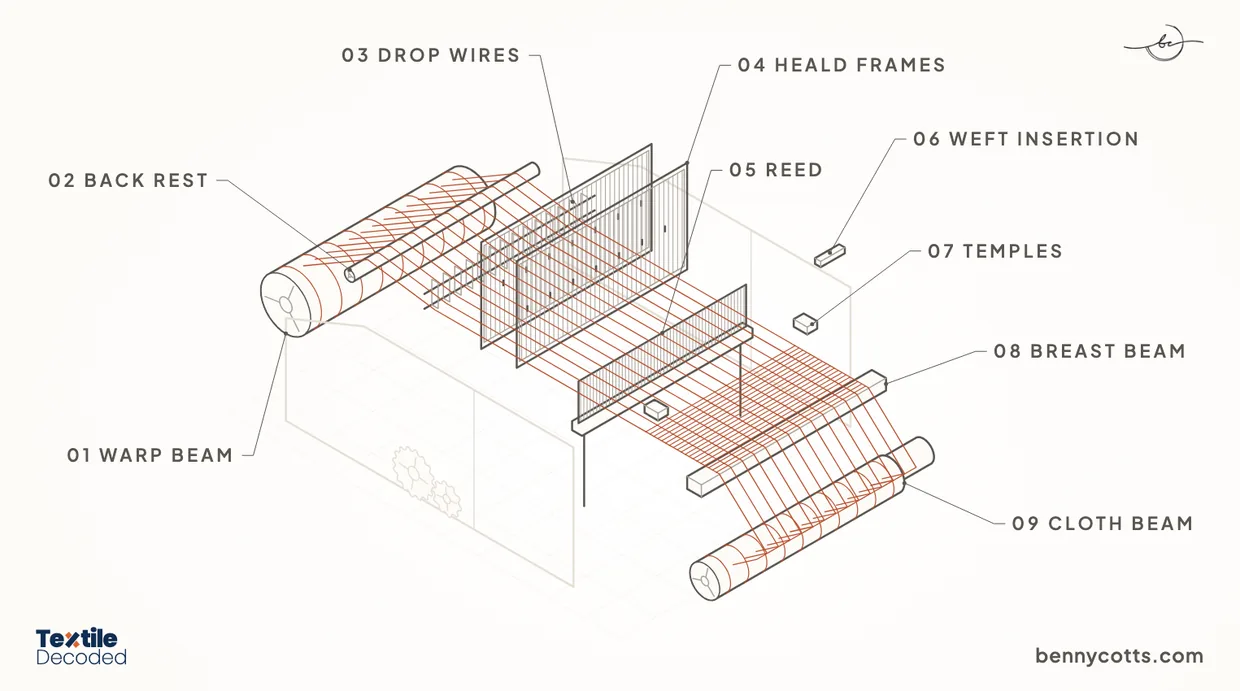 How a Loom Works: Parts and Motions of WeavingWarp and weft, the nine main parts of a loom, the shed-pick-beat-up cycle, and how heald frames turn the same yarn into plain, twill or dobby cloth.Video
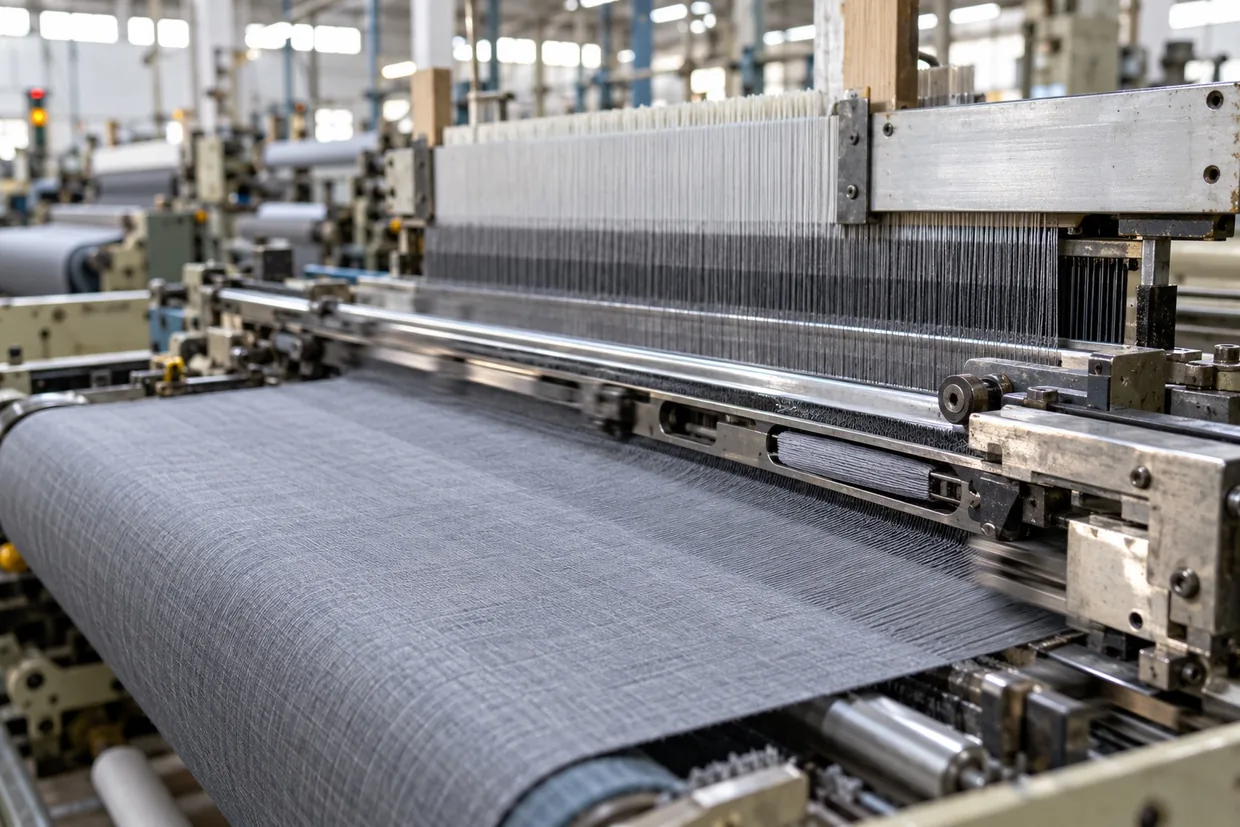 Loom Types: Shuttle, Rapier, Air-Jet, Projectile and Water-JetHow each main loom type carries the weft across the warp, what that means for speed, width and yarn choice, and which looms suit suiting, shirting and uniform cloth.
 Twill vs Plain Weave for UniformsIs twill for summer or winter? Weight decides, not weave. Twill vs plain weave vs gabardine compared in tables, with which weave suits trousers, shirts and blazers.
 Dobby Weave Structure and Chambray, ExplainedWhat dobby means, how the dobby weave structure builds stripes and geometric texture into cloth, how it differs from twill, and how chambray gets its soft heathered look.
 Yarn-Dyed vs Piece-Dyed Fabric, ExplainedThe difference between yarn-dyed and piece-dyed uniform fabric: how each is coloured, why checks and stripes are always yarn-dyed, and which to specify for a solid shade versus a pattern.
 Woven Fabric Defects: Where Each One Comes FromA defect-origin map for uniform fabric: which faults start at the yarn, which at the loom, and which in dyeing or finishing, and what that means for who can actually fix them.
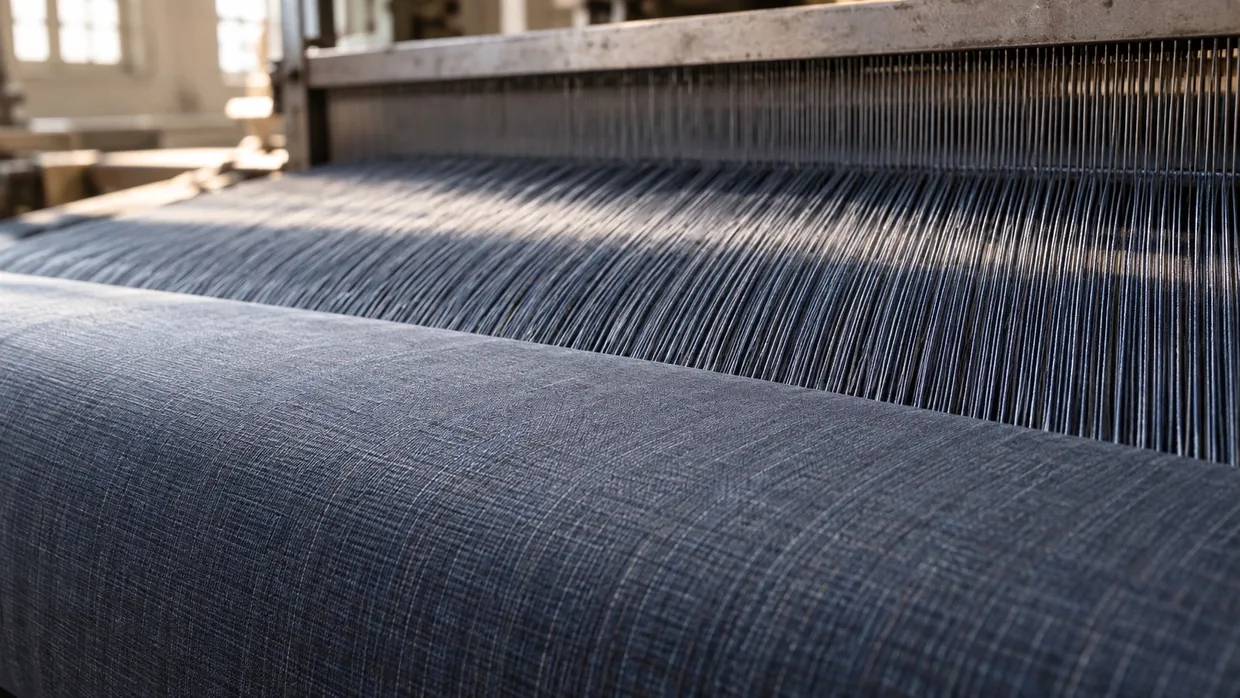 Woven vs Knitted Fabric: What's the Difference?Woven cloth crosses two sets of yarn at right angles; knitted cloth is built from rows of loops. Here is how that changes stretch, stability and shape, and why uniform trousers and shirts are woven while T-shirts and PT wear are knit.
Ready to place an enquiry?