
School group
Matching Shirt Colour Across 40 Schools, Three Years of Reorders
A school-uniform group sourcing for 40 campuses needed the same shirt shade to hold across every annual reorder, not just the first batch.
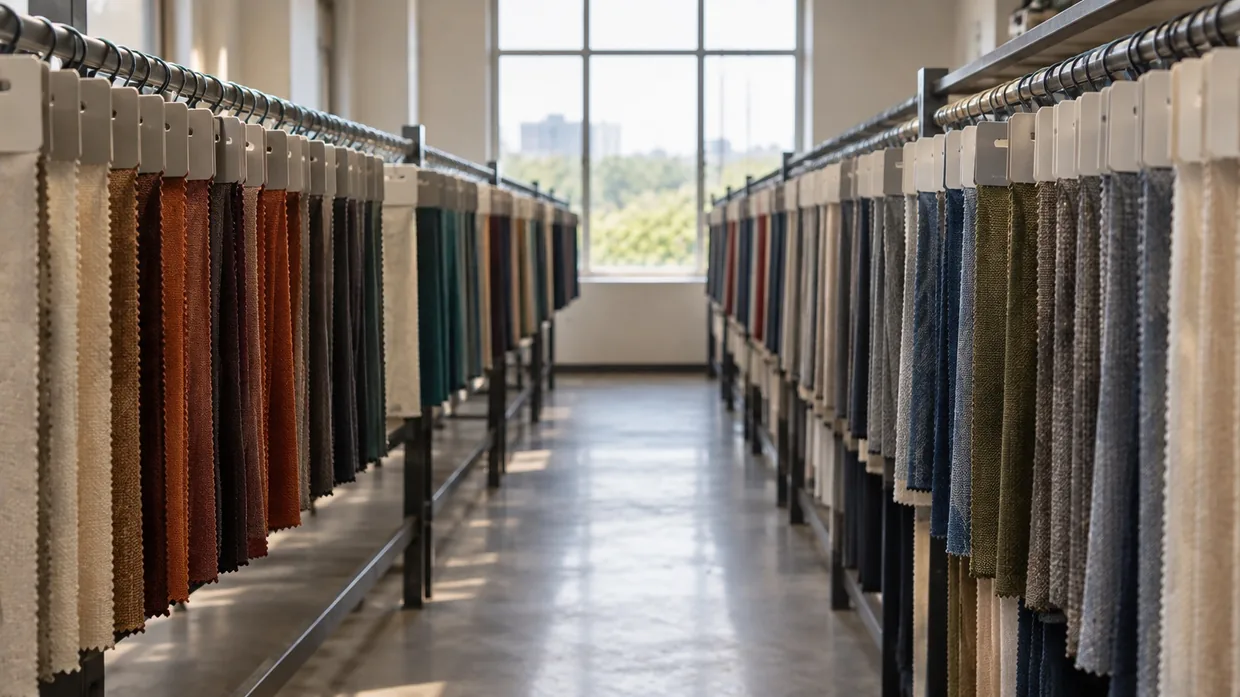
Scale
40 schools, recurring annual reorders
The challenge
A uniform group supplying a 40-school network was seeing visible shade drift between their first order and reorders placed a year later, enough that new students stood out next to returning ones on the same campus. The cause was structural, not careless dyeing: each reorder had been approved against the previous delivery rather than against a fixed reference, so every cycle inherited the last cycle's small error and added its own. Across three annual cycles those small errors compound into a mismatch a parent can see at the school gate, and with 40 campuses ordering on slightly different calendars, no two campuses were even drifting in the same direction.
Our approach
- We started by taking the drift out of the reference, not the dye house. The group's existing shirt fabric was matched to a single physical reference swatch, and the dye recipe was locked against that swatch at our partnered processing house rather than approving each new batch by eye against whatever shipped last. The fabrics behind the program, Sonata and Benzer Special, are both poly-viscose plain suitings in the 190 to 220 GSM band on a 147 cm width, which matters here because a recipe locked on one construction cannot simply be reused on another and read the same.
- Every reorder is now dyed against that same locked recipe and checked with a lab dip before the bulk lot is committed, so drift is caught at the approval stage, before greige is processed, not after delivery when the only fix is a re-run. Lab dips are compared under a consistent light source, because a khaki or a grey that matches under tube light can split visibly in daylight.
- We keep the physical reference swatch on file at the mill, indexed to the group's program rather than to any single order. A reorder placed three years later, by a different person on the group's side, still has the same baseline to match against, and the check twill used for the junior classes is held to its own reference in the same file so the program's plains and checks age together.
- The check twill added one more line to the file: consumption. Matching the junior check at pocket, placket and side seam takes more cloth per garment than the plain shirting does, so the group's buyer now carries a per-cloth consumption figure rather than one programme average, and the blazer tier is planned on its own construction and its own lead time rather than assumed to move with the shirting.
- For the group's buyer, the takeaway is that a reorder is only as good as the reference it is approved against. A delivered garment is a moving target, because it fades, gets washed and varies by campus; a held swatch tied to a locked recipe does not. Any program that reorders every year should name its reference in writing at the first order, so the question at each cycle is whether the new lot matches that reference, not whether it looks close to whatever arrived last.
Outcome
Reorders placed over multiple years still match the original shade, new students no longer stand out next to returning ones, and the group approves repeat orders on the lab dip alone instead of re-running a full colour approval every cycle.
Cite this case study
Quoting this page? Paste the line below so the credit links back.
<a href="https://www.bennycotts.com/case-studies/school-group-shade-matching-reorders">Matching Shirt Colour Across 40 Schools, Three Years of Reorders</a>, Benny Cotts, 2026Updated 5 September 2026 · Benny Cotts, Bhilwara
Fabrics
Fabrics used in this case
Spec, price and MOQ on every fabric page.

Sonata
Poly-Viscose blend · 190-210 GSM
Cost-efficient uniform fabric without compromising weave quality.

Benzer Special
Poly-Viscose blend · 200-220 GSM
Versatile PV blend optimized for uniform programs at scale.

School Check Twill
Poly-Viscose 70/30 · 225 GSM
Twill-woven poly-viscose check built for school uniforms.
Industries this applies to
Uniform programs these fabrics are used for
- Fabric for Corporate Shirts
- Fabric for School Uniforms
- Fabric for College & University Uniforms
- Fabric for Sports & PT Uniforms
- Fabric for Pre-School & Kindergarten Uniforms
- Fabric for Doctor Coats
- Fabric for Nurse Scrubs
- Fabric for Lab Coats
- Fabric for OT & Surgical Wear
- Fabric for Patient Gowns
- Fabric for Hotel Uniforms
- Fabric for Chef Coats
- Fabric for Waiter Uniforms
- Fabric for Salon & Spa Uniforms
- Fabric for Housekeeping Uniforms
Ready to place an enquiry?