
Textile Decoded
Selling Fabric: How a New Trader Finds Buyers for Uniform, Suiting and Shirting Cloth
A beginner's lesson on selling woven fabric: who buys uniform, suiting and shirting cloth, where a new trader meets them, what they ask for before ordering, and how repeat trust is built.
Jump to section
Quick answer
Uniform, suiting and shirting fabric is mostly bought by people who turn it into garments: uniform stitchers and tailors, corporate uniform makers, suppliers bidding on tenders, garment exporters and cloth retailers. A new trader reaches them through wholesale markets, trade fairs, online business directories, direct visits and calls, WhatsApp catalogues and, for government work, the GeM portal. Before ordering, buyers want swatches, a shade card, a spec sheet, the minimum order and the lead time. What turns a first order into repeat business is simple but hard to do: the same shade every time and delivery on the promised date.
Who actually buys this fabric
Very little uniform or suiting cloth is bought by the person who will wear it. It is bought by businesses that cut and stitch it, or resell it. Knowing which of these you are talking to shapes everything else: the quantity, the questions and how fast they decide.
- Uniform stitchers and tailors: they make school, hospital or staff uniforms in batches. Schools usually do not buy cloth themselves. They appoint a tailor or uniform shop, and that shop buys the fabric.
- Corporate uniform makers: garment units that supply staff wear to companies, hotels, hospitals and airlines. They care about shade matching across years and about fabric that survives industrial washing.
- Tender suppliers: firms that bid on government and institutional uniform contracts. They buy against a written specification and need test reports that prove it. The lesson on government tender supply covers how that works.
- Garment exporters: they make garments for overseas brands and need fabric that passes the brand's tests, with paperwork to match.
- Retailers and wholesalers: cloth shops that sell suiting and shirting lengths to customers who get them stitched. They want variety in shades and designs more than huge quantities of one.
Where a new trader meets buyers
There is no single channel that works for everyone. Most traders use a few at once and learn which ones bring the buyers that suit their cloth.
- Wholesale cloth markets: every textile city has a market area where retailers and tailors come to buy. Walking the market teaches you prices, popular shades and who buys what, faster than anything else.
- Trade fairs: textile and garment fairs bring buyers to one hall for a few days. They are useful for meeting garment makers and exporters, but they cost money and time. Go with samples and a clear list of what you can supply.
- Online business directories and B2B listings: buyers search them for suppliers. A listing works best with real photos, clear specifications and quick replies.
- Direct outreach: calling or visiting uniform makers, school uniform shops and corporate garment units. It is slow, but a buyer met in person often stays.
- WhatsApp catalogues: many buyers in India now order from photos and short videos sent on WhatsApp. A tidy catalogue with shade names, fabric details and a quick response wins enquiries.
- Government tenders through GeM: GeM (Government e-Marketplace) is the government's online buying portal. Suppliers register and bid, and the buyer is a government department or institution. Careful paperwork and exact match with the specification win here.
What buyers ask for before they order
A serious buyer will not order bulk fabric from a description alone. Expect the same few requests from almost every one, and keep them ready.
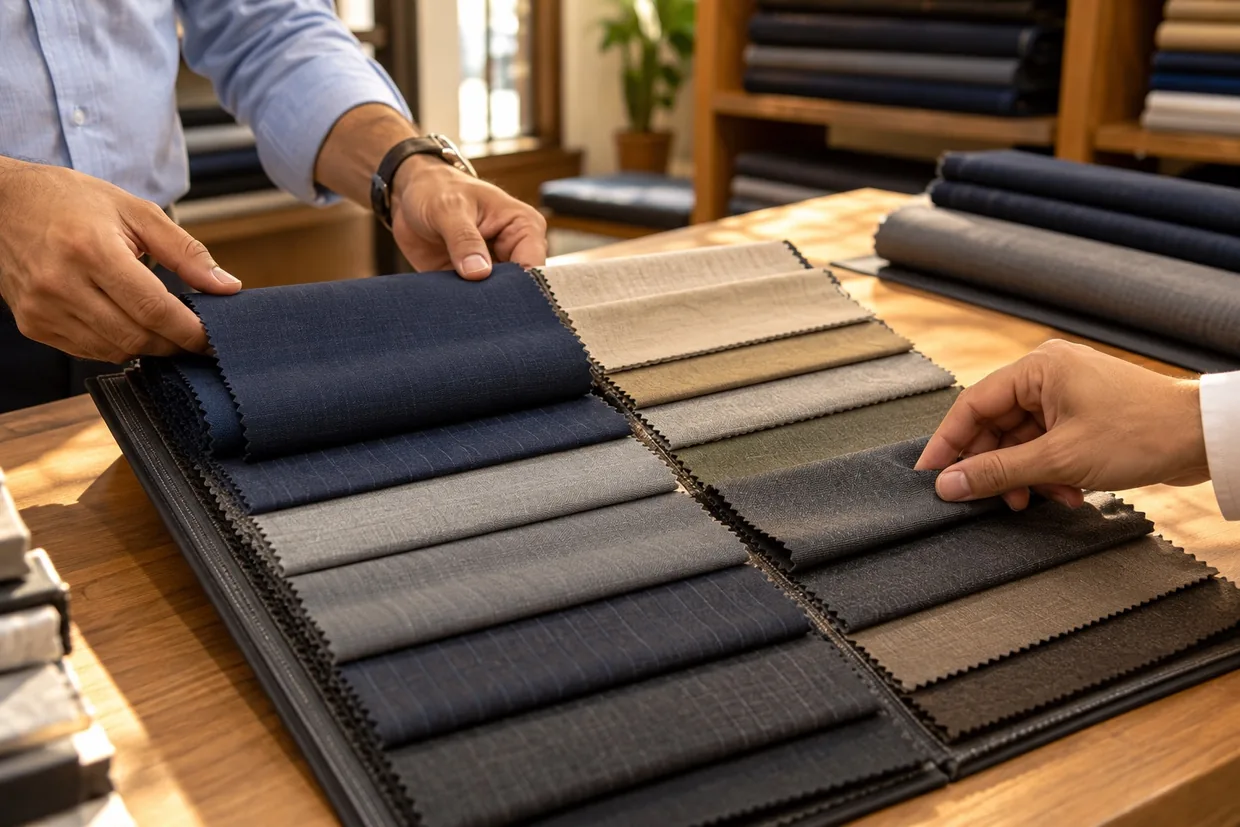
- Swatches: small cut pieces of the actual fabric, so the buyer can feel the handle (how the cloth feels in the hand), weight and weave.
- A shade card: a card or booklet showing the available colours side by side. The difference between the two is explained in swatches vs shade cards.
- A spec sheet: the written facts about the fabric, such as blend, GSM (grams per square metre, a measure of weight), width, weave and test results. See how to read a fabric spec sheet.
- MOQ, the minimum order quantity: the smallest order you will take per design or shade. The MOQ guide explains why minimums exist.
- Lead time: how long from a confirmed order to dispatch. Buyers plan school sessions and staff rollouts around it, so give a date you can keep. The lead times guide covers what drives it.
- Sampling: a sample length, or a shade matched to the buyer's own reference, before bulk. The sampling guide walks through the steps.
Your first orders
First orders are usually small. The buyer is testing you, not the market. Treat a small order with the same care as a large one. The shade should match the approved sample, the width and weight should match the spec sheet, and the rolls should be packed and labelled properly.
Be clear about money and terms in writing before dispatch. The lesson on understanding fabric quotations explains what a quote should state, and payment terms for bulk orders covers the common arrangements between buyers and sellers.
How repeat trust is built
Most fabric business is repeat business. A uniform maker who finds a reliable source will reorder the same quality every season and not search again. That trust rests on a few plain things.
- Consistent shade: a reorder must match the last lot closely, or the new uniforms will not match the old ones. Agree a shade standard up front, through lab dips and shade approval, and understand dye lot consistency. This prevents most complaints.
- On-time delivery: a late lot can stop a school from opening with uniforms ready. If a delay is coming, say so early.
- Honest specifications: send what the spec sheet says. A buyer who checks the cloth on arrival, as described in how to inspect uniform fabric on delivery, will notice the difference.
- Fast, plain answers: reply quickly, admit what you cannot do, and fix problems without argument.
Where a weaver fits in
A trader needs a dependable source as much as a buyer needs a dependable trader. At Benny Cotts we weave in-house at Village Atoon in Bhilwara, and dyeing, processing, finishing and testing are done at partnered Bhilwara process houses. We are ISO 9001:2015 certified. Working with a weaver who can share swatches, shade cards and spec sheets makes it easier for a trader to answer the buyer questions above.
To see our uniform, suiting and shirting qualities, Request Catalog from our quote page.
FAQ
Frequently asked questions
- Who buys school uniform fabric?
- Usually not the school itself. Most schools appoint a tailor or uniform shop, and that business buys the fabric, stitches the uniforms and sells them to parents or the school.
- What should a new fabric trader keep ready for buyers?
- Swatches, a shade card, a spec sheet for each quality, a clear minimum order quantity, a realistic lead time and a simple way to send samples.
- What is GeM?
- GeM, the Government e-Marketplace, is the Indian government's online portal for buying goods and services. Registered suppliers can bid on government uniform and fabric requirements there.
- Why do fabric buyers reorder from the same supplier?
- Because a matching shade, the same quality and on-time delivery are hard to find. Once a supplier proves all three, most buyers do not want to risk switching.
- Can I get swatches from Benny Cotts?
- Yes. To see our uniform, suiting and shirting qualities, Request Catalog at /quote.
Cite this guide
Quoting this page? Paste the line below so the credit links back.
<a href="https://www.bennycotts.com/guides/selling-fabric-how-new-traders-find-buyers">Selling Fabric: How a New Trader Finds Buyers for Uniform, Suiting and Shirting Cloth</a>, Benny Cotts, 2026More in The trade
- The Textile Value Chain: Who Does What, From Fiber to Uniform
- Uniform Fabric Pricing Explained
- Who Pays When Duty, Freight or Fiber Costs Move During a Fabric Contract
- Understanding Fabric Quotations
- Uniform Fabric MOQ in India, Explained
- Uniform Fabric Sampling Guide
- Custom Production vs Ready Stock Fabric
- Payment Terms for Bulk Fabric Orders: Advance, LC, Collections and Open Account
- Uniform Fabric Lead Times in India
- How Woven Fabric Is Packed and Shipped: Rolls, Bales, Labels and Paperwork
- When Bulk Fabric Arrives Wrong: Claims, Remedies and Tolerances
- HSN Codes and GST Basics for Uniform Fabric Buyers
- Incoterms Explained for Uniform Fabric Buyers Sourcing from India
- How to Import Uniform Fabric from India: A Buyer's Guide
- Certificates of Conformity: The Destination-Market Paperwork That Can Stop Fabric at Your Border
- EU Textile EPR, Explained for Indian Fabric and Garment Exporters
- The Digital Product Passport for Textiles: The Data Your Fabric Supplier Will Need to Give You
- Uniform Fabric for Government Tenders: A Supplier's Guide
- Tender Documentation for Uniform Fabric: What a Mill Must Actually Produce
- Selling Fabric: How a New Trader Finds Buyers for Uniform, Suiting and Shirting Cloth
Updated 18 October 2026 · Benny Cotts, Bhilwara
Fabrics
Fabrics mentioned in this guide
Spec, price and MOQ on every fabric page.

Officer Choice
Poly-Viscose (PV) blend · 210-230 GSM
Crisp, structured suiting engineered for officer uniforms.

Power Gold
Premium Poly-Viscose blend · 230-250 GSM
Our premium-line suiting with a refined hand and superior drape.

Spun Shirting
Micro 1/40s spun polyester · 67 GSM
Lightweight micro shirting, spun 1/40s count, in 74 shades.
Industries this applies to
Uniform programs these fabrics are used for
- Fabric for Business Attire
- Fabric for Corporate Shirts
- Fabric for Corporate Trousers
- Fabric for Blazers & Waistcoats
- Fabric for Cabin Crew Uniforms
- Fabric for Ground Staff Uniforms
- Fabric for Army Uniforms
- Fabric for Police Uniforms
- Fabric for Security Guard Uniforms
- Fabric for Industrial Uniforms
- Fabric for Construction Workwear
- Fabric for Business Suits
- Fabric for Black-Tie Attire
- Fabric for Formal Event Wear
Fabric types covered here
Keep reading
Related guides




Ready to place an enquiry?