Topic
Fibers
Where every fabric starts: what cotton, polyester and viscose are, how each is made, and why mills blend them.
12 articles · 7 videos
Featured video
What Is a Fiber? Natural, Man-Made and Synthetic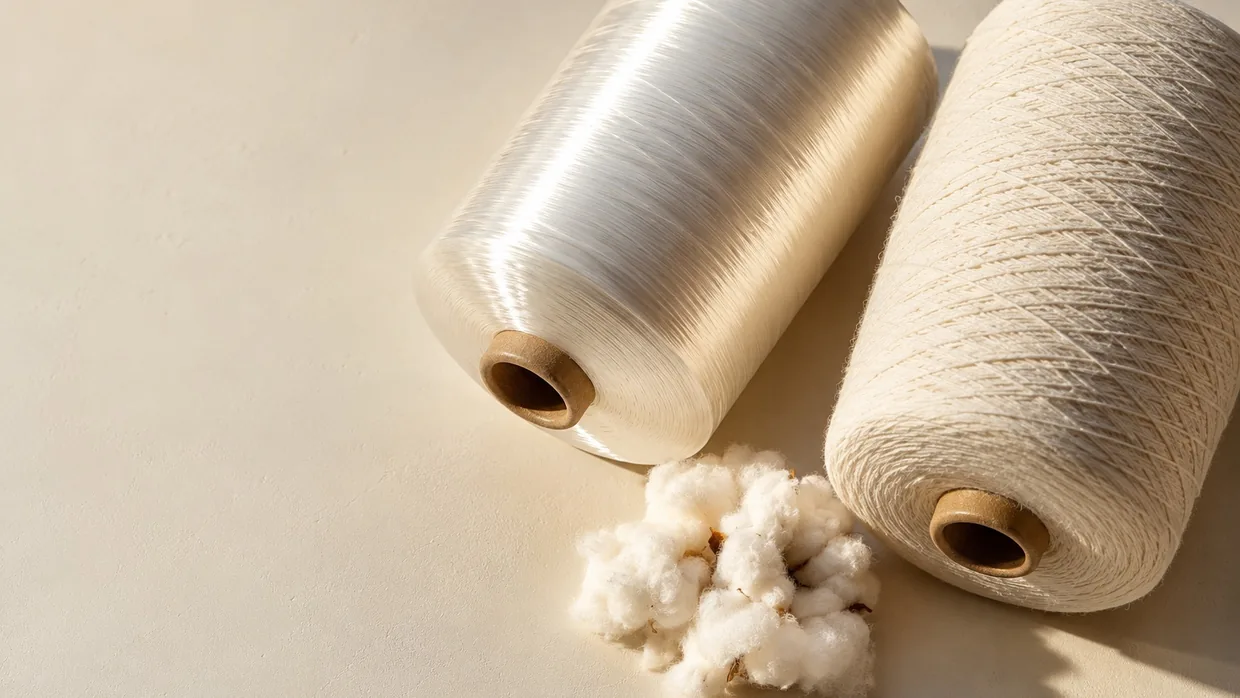 What Is a Fiber? Natural, Man-Made and SyntheticA beginner's guide to textile fibers: the natural, regenerated cellulose and synthetic families, staple versus filament, and why fiber choice decides how uniform fabric behaves.Video
 Cotton: From Field to BaleHow cotton is sown, grown, picked, ginned and baled in India, and what staple length and micronaire tell a spinner about the fiber before it ever becomes yarn.Video
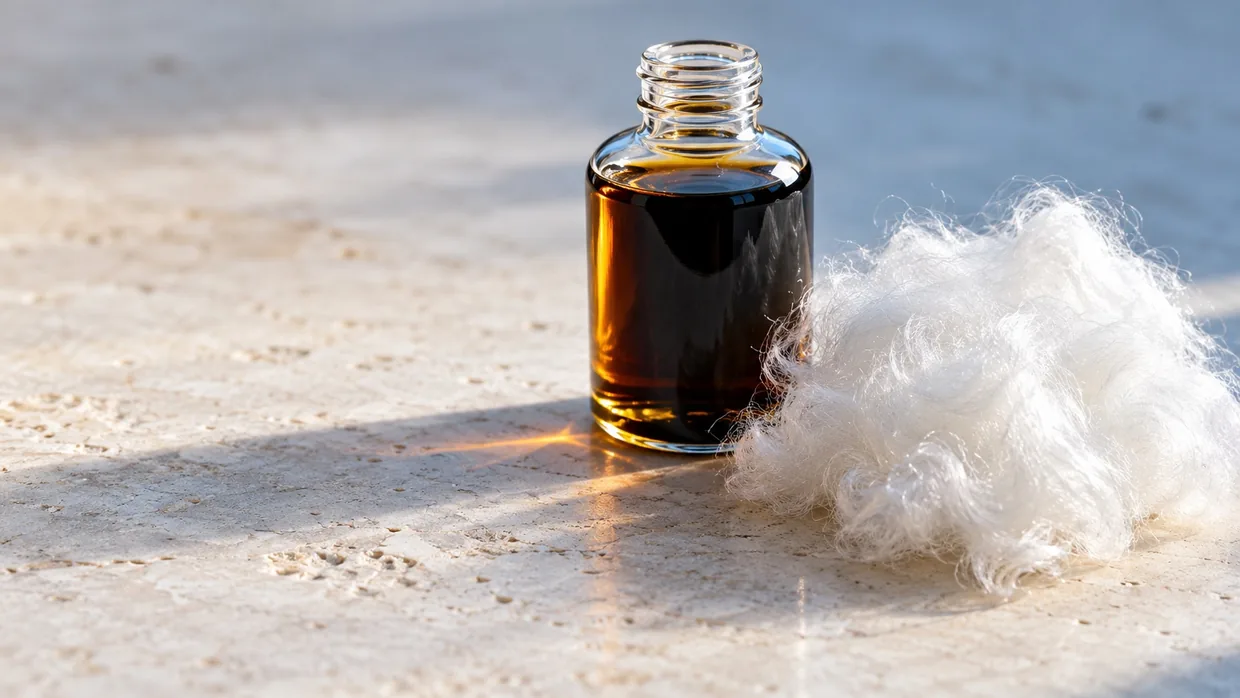 Polyester: From Crude Oil to FiberHow polyester is made, step by step: crude oil to paraxylene and PTA, MEG, polymerisation into PET chip, melt spinning, and the split into staple and filament.Video
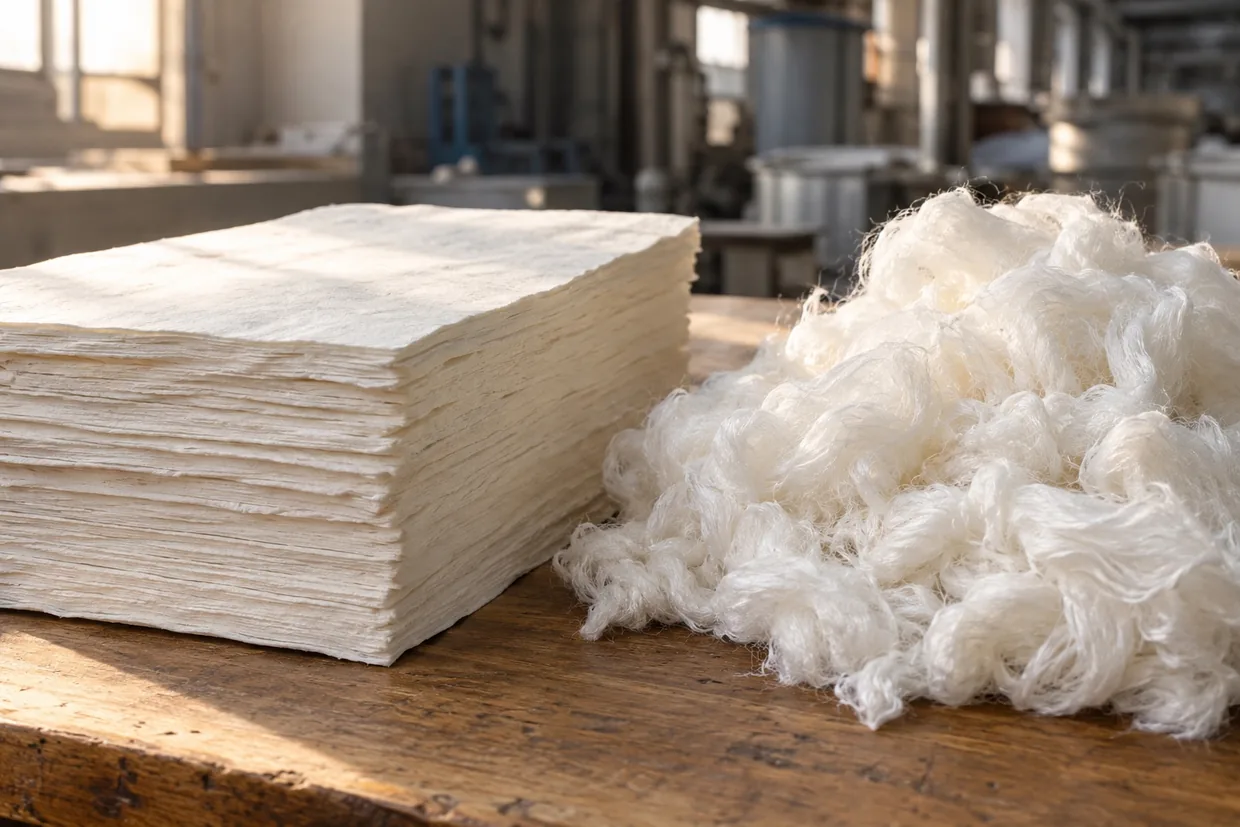 Viscose: Fiber From Wood PulpHow viscose is made from wood: dissolving pulp, the xanthate route, spinning into an acid bath, why it is natural-based but man-made, and how modal and lyocell differ.Video
 Wool, Linen, Nylon and Elastane: The Rest of the Fiber FamilyShort profiles of wool, linen, nylon and elastane: what each fiber is, how it behaves, and where it shows up in uniform, suiting and workwear fabric.Video
 What Moves Fiber Prices: Cotton, Polyester and ViscoseA beginner's lesson on the forces behind cotton, polyester and viscose fiber prices, and how a fiber move travels down to the price of finished fabric.Video
 Blends Compared: Poly-Viscose, Poly-Cotton, Cotton and PolyesterA side by side lesson on poly-viscose, poly-cotton, 100% cotton and 100% polyester fabric: feel, breathability, durability, wrinkles, shrinkage, pilling, care and best uses.Video
 Poly-Viscose vs Cotton for Uniforms: 7 DifferencesPoly viscose vs cotton, side by side: 7 differences, a blend ratio table (65/35, 80/20) and when PV suits summer or winter. A mill's view, not a shop's.
 Poly-Viscose and Poly-Cotton Ratios Explained: The Manufacturing Reasons Behind Each BlendA mill-level explanation of why poly-viscose and poly-cotton blend ratios are chosen the way they are, and how ratio interacts with GSM and weave.
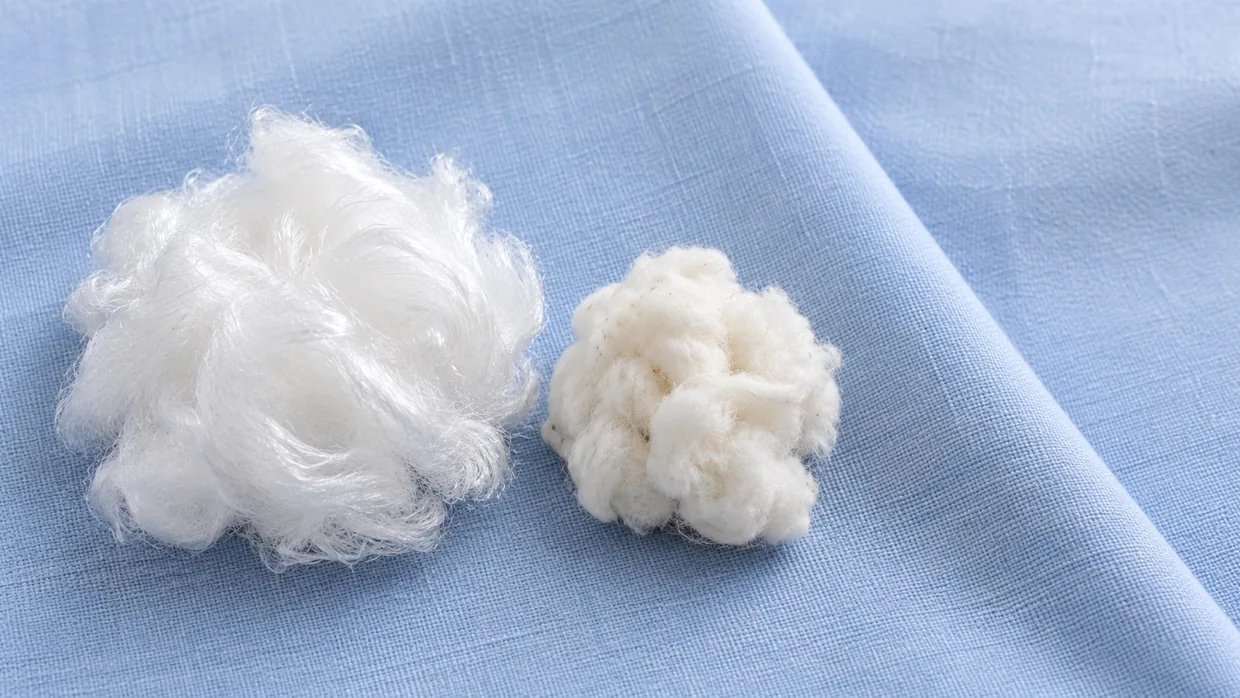 Why 65/35 Is a Common Ratio for Uniform ShirtingWhat the polyester share and the cotton or viscose share each do in a uniform shirting blend, why 65/35 keeps turning up, and what moving the ratio either way trades off.
 100% Polyester Suiting for Uniforms: Where It Wins and Where It LosesWhat all-polyester suiting does well in institutional wear and what it gives up against poly-viscose and poly-cotton: shade range, wash fastness, shrinkage, breathability, static and pilling, with the GSM bands and qualities we hold.
 Stretch and Lycra Uniform Fabric, ExplainedWhat elastane does in a woven uniform suiting, why recovery matters more than stretch, the two weights we weave, and what stretch changes in cutting, sewing and laundering.
Ready to place an enquiry?